Case Studies
Consolidating Tactical Procurement Into a Unified, Policy-Driven Ecosystem
Automated Tail Spend & Catalogue Governance
A massive multinational IT services and consulting enterprise was losing critical sourcing effort and financial oversight to fragmented, low-value tail spend across its global business units. While individual tactical purchases carried small unit costs, the lack of centralized policy enforcement created severe procurement inefficiencies and blocked spend visibility.
Success Stories
Real Results from Real Enterprises
Less Manual Effort>70%
High-volume tactical purchase requests are completely automated through structured, guided catalogue buying, eliminating manual administrative workflows for global teams.
Growth in Usage3 Times
Internal procurement workflows see a massive threefold increase in active catalogue adoption versus previous cycles, successfully bringing hidden tail spend under control.
Policy-Driven Compliance100%
Strategic corporate buying regulations, category budget limits, and vendor expirations are automatically enforced across all regional offices at the point of purchase.
Challenge
The Fragmented Tail Spend Risk
The organization struggled to govern high-volume, low-value tactical procurement activities across its decentralized global operations. This unmonitored tail spend lacked policy enforcement and consumed a disproportionate share of internal sourcing resources. Because individual business units placed disjointed orders over email, the corporate finance division faced a complete lack of item-level spend visibility. Sourcing teams could not efficiently validate duplicate items, monitor contract expirations, track vendor SLAs, or prevent unauthorized purchases from unapproved suppliers.
Solution
The Governed Catalogue Engine
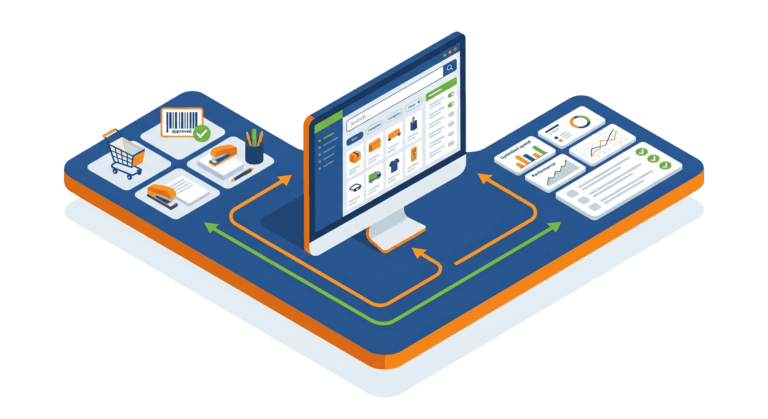
To secure absolute control, ezAtlas implemented its centralized Catalogue Management System integrated directly with the client’s downstream SAP and finance infrastructure. The platform establishes a vendor self-service portal for bulk uploads while standardizing data via unique Material IDs, Contract IDs, and Vendor IDs. By embedding guided-buying interfaces, the system maps items to approved budgets, auto-triggers POs, and runs automated marketplace punch-outs. This native sync ensures flawless data compliance and seamless financial reconciliation.