Blogs

Procurement Should Be as Easy as Buying a Pizza
But Governance Must Never Be Optional
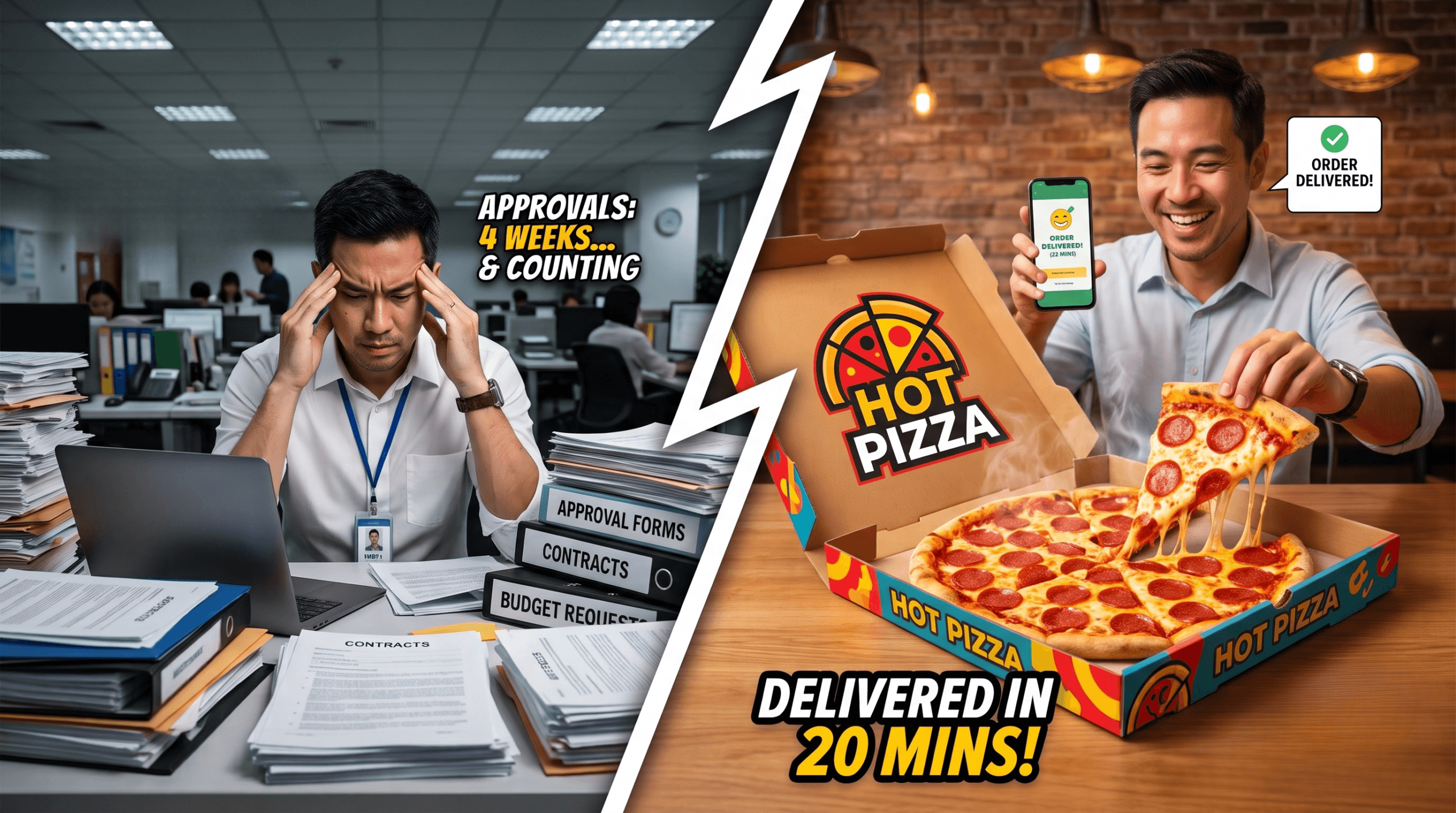
Ordering pizza on your phone takes less than a minute, but getting a basic work laptop, software license, or office chair approved often takes weeks of back-office paperwork. This slow turnaround naturally annoys staff members who are used to the immediate checkout on personal apps. However, corporate purchasing operates under completely different rules because you are deploying company budgets rather than personal cash. The real difference comes down to who owns the funds; personal shopping uses your own cash, while corporate procurement handles company capital. That responsibility changes your entire approach to transactions. Instead of getting rid of necessary oversight, modern companies need to hide that technical complexity behind a smooth, consumer-style user interface. Modern businesses do not need to abandon risk management or spending controls to move faster. They just need to automate those policy checks. Doing this handles compliance behind the scenes, letting employees grab tools quickly without dealing with slow, manual paperwork.
The Rise of Consumer Expectations in Enterprise Purchasing
Everyday e-commerce is incredibly smooth now. In our personal lives, we expect to see transparent pricing, read quick user reviews, click a single button to order, and track our deliveries immediately.These smooth daily interactions have fundamentally reset employee expectations.
Staff members no longer compare internal corporate purchasing tools with alternative procurement software. They compare them to consumer apps like Amazon, Uber, Swiggy, and Apple. When they instead encounter dense forms, confusing policies, and multi-layered approval chains, frustration sets in.
This administrative friction directly leads to shadow procurement. Business users skip approved corporate channels entirely—using personal credit cards, buying software without IT approval, or hiring outside vendors completely outside established corporate rules. While this might solve a short-term project need, it exposes the organization to massive compliance and financial risks.
Why Enterprise Procurement Is Different
Corporate procurement is not just a quick checkout; it requires strict oversight. Every request directly hits department budgets, triggers internal financial checks, and affects tax rules, vendor safety ratings, and company audit histories.
A back-office procurement team has to answer a long list of questions that a pizza order never raises:
- Is the budget actually available for this quarter?
- Is the chosen vendor fully approved and vetted?
- Do we have an existing master contract with better pricing?
- Has the legal team reviewed the underlying risk terms?
- Does the transaction match our formal compliance policies?
- Will the incoming vendor invoice line up with our purchase order?
- Can this entire transaction withstand a strict external audit?
Because of these safeguards, enterprise purchasing can never be completely identical to a personal consumer checkout. However, the software layout should make it feel just as simple.
The Real Problem Is Not Governance
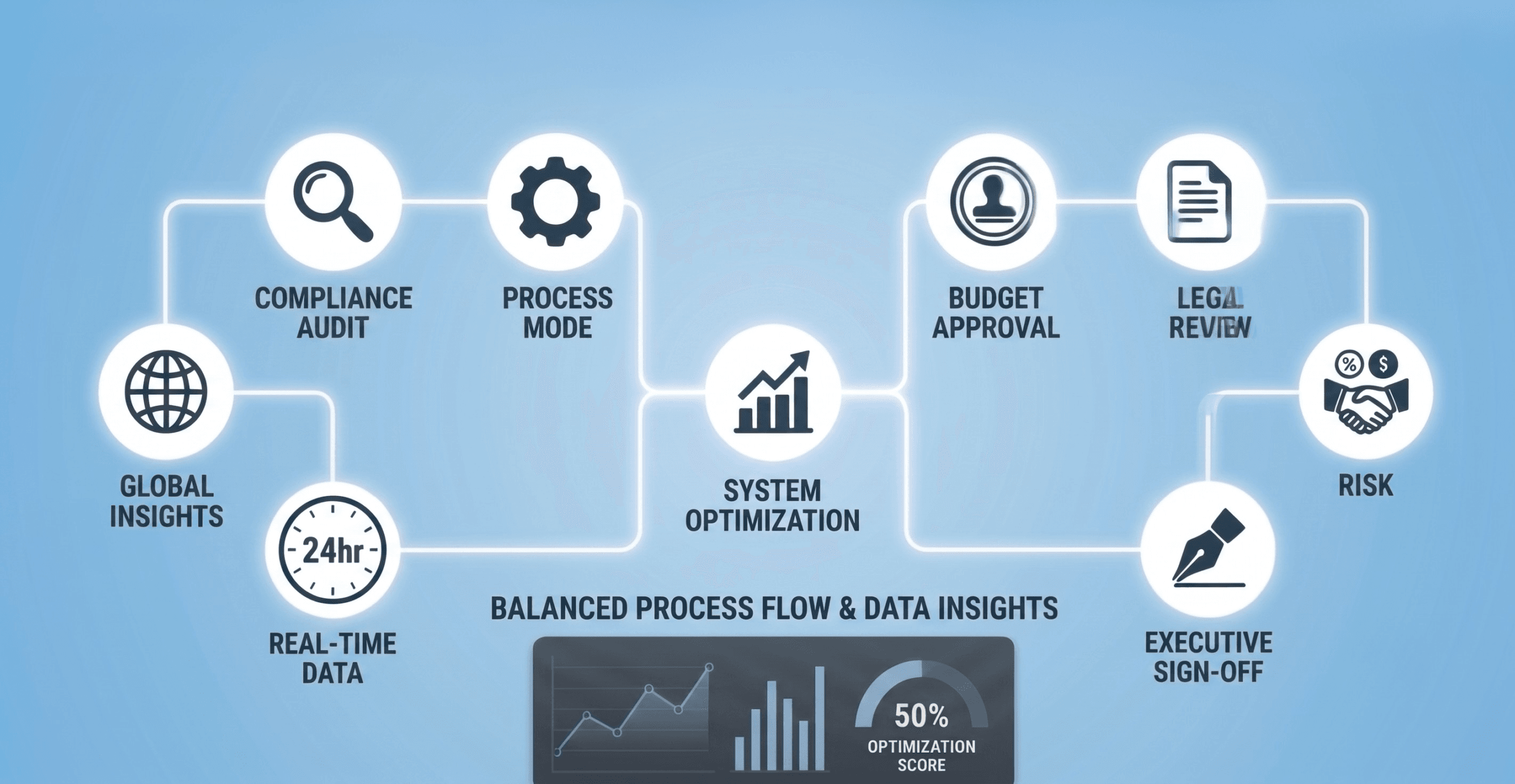
Many management teams assume that strict policy rules are what make corporate procurement move at a snail’s pace. In reality, the underlying governance is rarely the bottleneck—inefficient manual processes are the problem.
The actual operational slowdowns stem from classic back-office habits:
- Chasing down managers over email for approval signatures.
- Tracking active purchases across separate Excel spreadsheets.
- Validating department budgets offline through slow message threads.
- Manually onboarding new vendors one by one.
- Trying to copy data across disconnected legacy systems.
Relying on manual updates at every single turn is exactly what creates these long backlogs. The core problem isn’t the underlying governance rule; it is the slow, manual execution of that rule.
Making Governance Invisible
Modern digital procurement platforms are completely flipping this paradigm. Good software integrates your spending rules right into the screen layout so employees do not have to memorize compliance policies. Selecting a product from an approved catalog runs all the necessary checks automatically. In seconds, the platform confirms budget availability, sends out approval alerts, checks the supplier contract, and creates an official audit record. The employee experiences a quick, intuitive checkout. Meanwhile, the organization retains total spend control and compliance.
Guided Buying: Navigating Purchases Intuitively
Modern Procurement Software relies heavily on guided purchasing paths to keep teams compliant. Instead of forcing workers to learn complex back-office rules, the platform handles those decisions. An employee just enters the tool or service they need, and the system directs them toward preferred suppliers, existing corporate agreements, and approved checkout routes. It turns a confusing task into an intuitive step, saving staff from endless forms while freeing up procurement managers from chasing down rule violations.
The Role of AI in Modern Purchasing
Artificial intelligence is rapidly accelerating this operational shift. Automation removes daily administrative friction instead of adding technical hurdles. AI handles tasks like sorting spend data, spotting weird purchasing patterns, and checking incoming invoices. This software is not meant to replace your procurement team. It just handles the repetitive data entry so managers can stop drowning in paperwork and focus on high-level vendor relationships and business growth.
Procurement as a Business Enabler
Top-performing purchasing teams look at much more than just price cuts. Success metrics now center on processing speed, rule compliance, vendor safety, and how easily employees use the system. Good procurement keeps a company moving forward instead of acting as a roadblock. The right platform gives employees their work tools quickly while keeping back-office accounting controls and audits completely secure.
Conclusion
Contrasting food delivery with business purchasing points to an obvious reality. Staff members genuinely need a simple, hassle-free way to buy their work tools. Organizations require absolute compliance and financial control. Neither expectation is wrong.
The future of efficient operations isn’t about compromising on one side to satisfy the other. It is about merging both worlds, making procurement feel as straightforward as using a personal app, while quietly executing the compliance, accountability, and governance that every stable business requires.
More Case Studies