Blogs

Why Device-as-a-Service (DaaS) Programs Need More Than Asset Management
IT Lease Management for Device-as-a-Service (DaaS) Programs
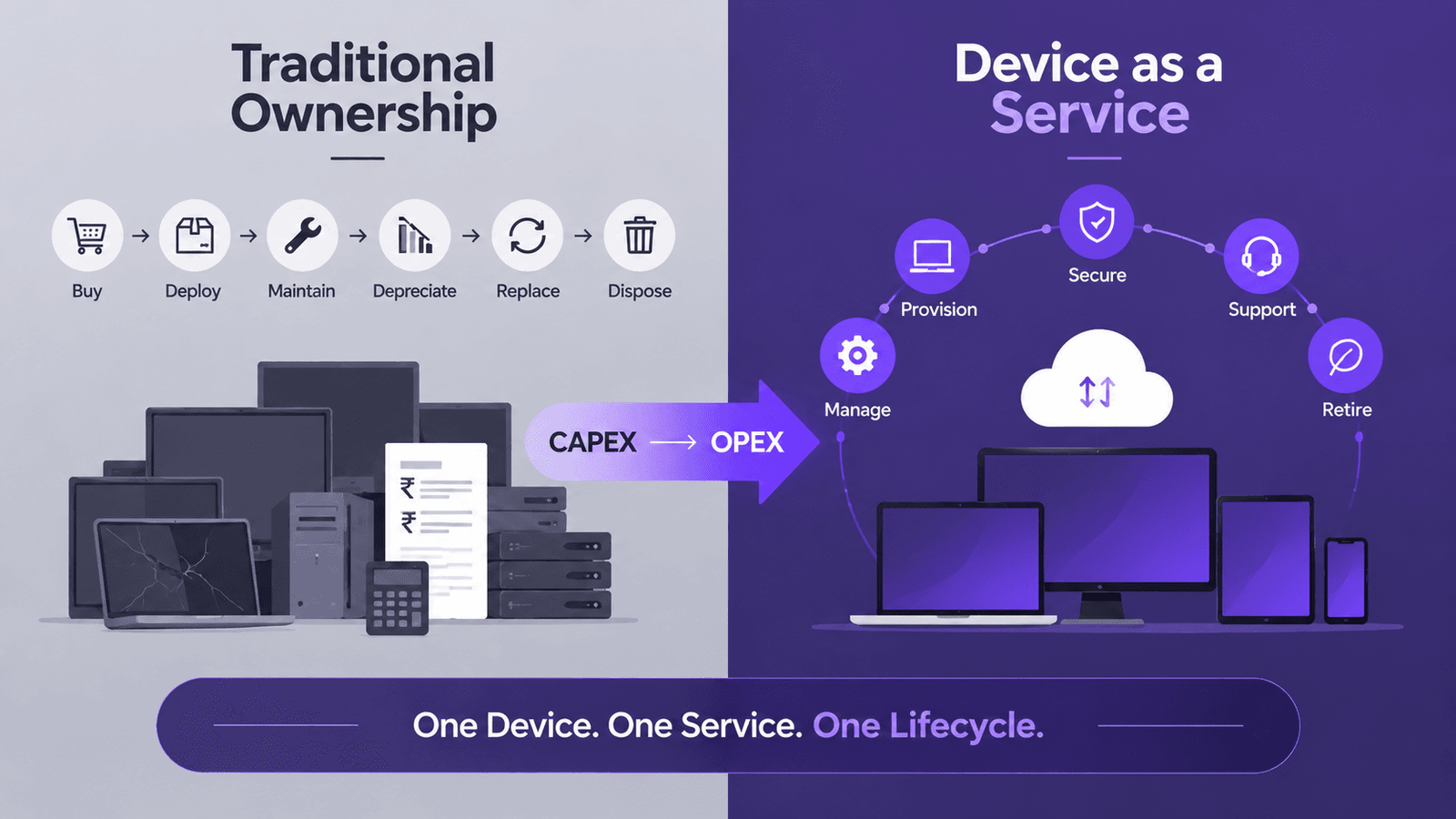
The global shift toward Device as a Service (DaaS) models is picking up massive speed as modern companies move away from heavy capital expenditures (CAPEX) in favor of predictable operational expenses (OPEX). Shifting laptops, desktops, mobile phones, printers, and essential office hardware over to this subscription layout offers an obvious win. Organizations get steady monthly billing, built-in hardware upgrades, lighter operational loads on internal teams, and a much better overall experience for employees.
But a major structural hurdle appears once a DaaS program expands to cover hundreds or thousands of active deployments. Keeping track of physical equipment whereabouts is actually the simple part. The real administrative headache comes from trying to coordinate complex lease terms, master contracts, monthly invoicing, scheduled tech refreshes, physical returns, and deep financial reconciliations across multiple corporate divisions.
The Hidden Challenge in DaaS Programs
Far too many corporate operations rely on an unstable combination of individual spreadsheets, siloed tools, legacy ERP entries, disparate leasing portals, and manual data entry to oversee their subscription devices. Because these points don’t talk to each other, operations and finance leads constantly run into dead ends when trying to clear up foundational logistical blind spots:
- Are we actually being billed the correct contractual rate for every piece of active hardware?
- Which specific batches of laptops are coming up for scheduled upgrades or returns this quarter?
- Do our underlying lease terms actually match how long employees keep and use these devices?
- Which vendor agreements are hitting their formal expiration windows?
- Have all shipped-back units been officially struck from active vendor billing schedules?
- Do incoming third-party invoices genuinely align with our negotiated contracts?
- What is our true, unhedged financial liability across all active equipment leases?
Operating without a centralized guardrail leaves businesses exposed to ongoing vendor invoicing disputes, structural compliance issues, massive back-office inefficiencies, and substantial waste.
Introducing DaaS 360 - ITLM
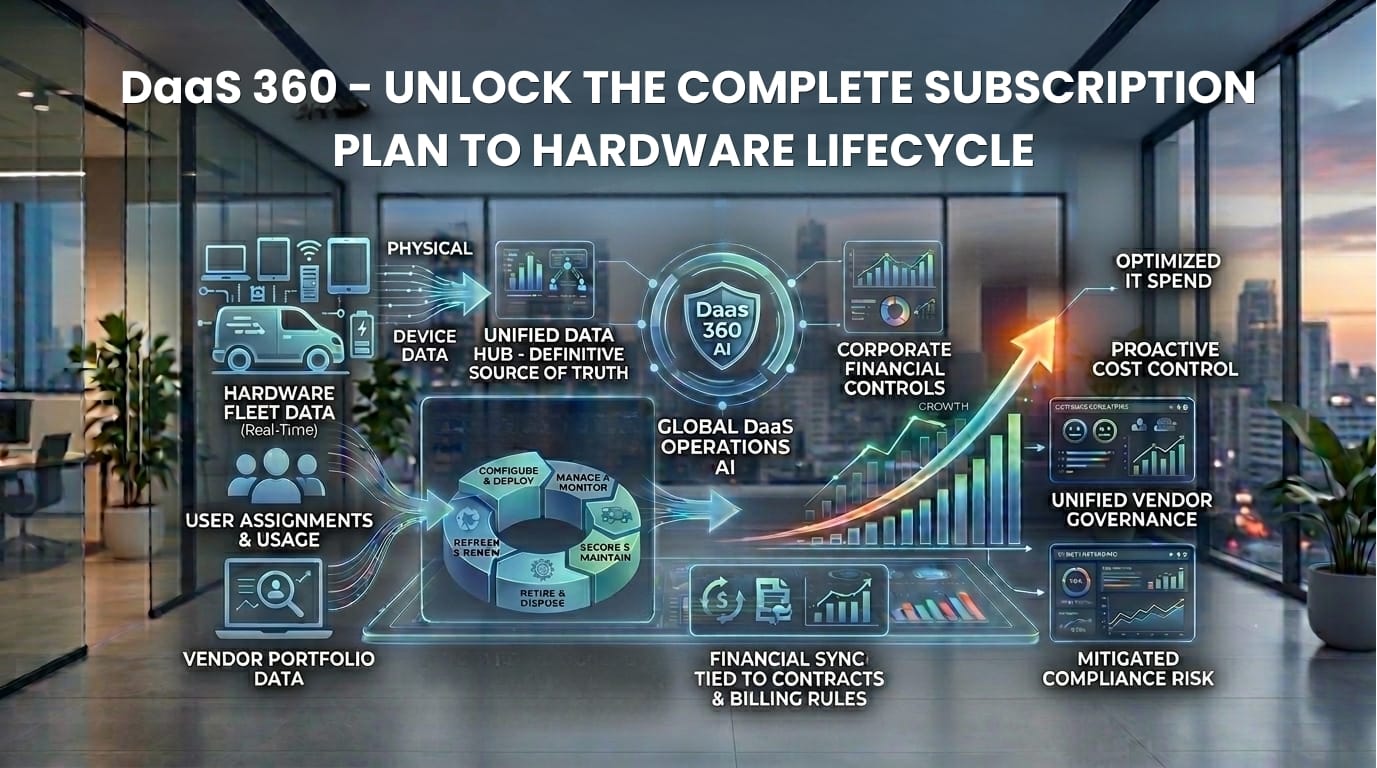
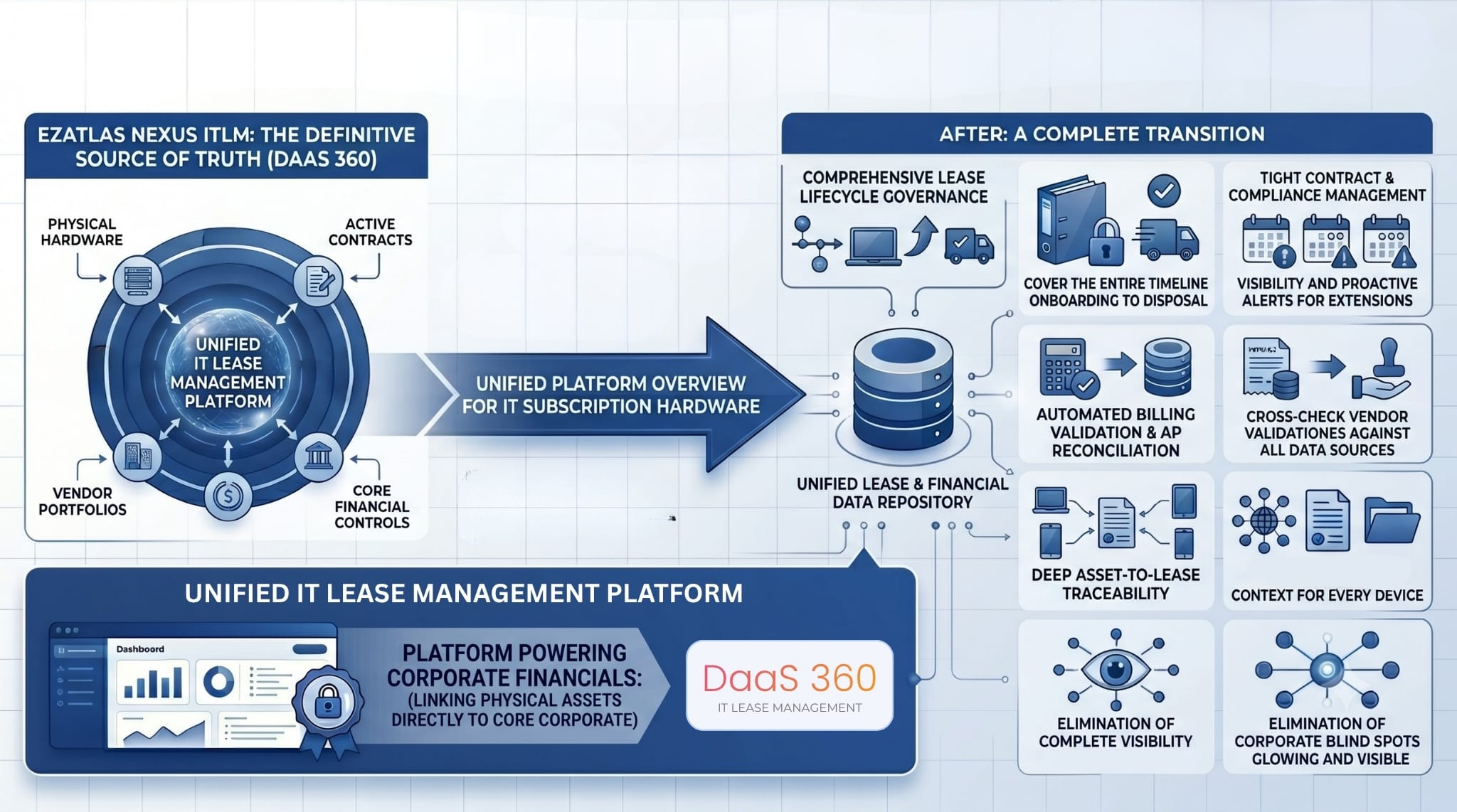
The EZATLAS NEXUS’s Daas 360, an IT Lease Management (ITLM) system provides a single, unified governance platform built specifically to oversee the complete operational and financial lifecycle of subscription hardware. The software serves as a definitive source of truth, tying physical hardware directly to active contracts, recurring billing rules, third-party vendor portfolios, and core corporate financial controls.
Comprehensive Lease Lifecycle Governance
The platform allows teams to track the entire lease timeline from initial delivery and network onboarding to upgrade windows, term extensions, physical returns, final buyouts, and structural disposal. This rigorous setup ensures that every machine remains permanently tied to its unique agreement and contract rules from day one until retirement.
Tight Contract & Compliance Management
It keeps all your contract details, payment timelines, and renewal schedules visible in one place. The platform sends out automatic alerts early on, giving managers the exact runway they need to handle equipment returns or rewrite lease extensions before costly fees hit the budget.
Automated Billing Validation & AP Reconciliation
Confirming vendor invoice accuracy is arguably the single largest headache in a scaling deployment model. NEXUS ITLM fixes this by systematically cross-checking vendor bills against active contract rules, current live inventories, real-world deployment data, and historical billing schedules before an account manager ever signs off on a payment. This precise check cuts out costly overpayments, catches billing mistakes immediately, and tightens general financial oversight.
Deep Asset-to-Lease Traceability
Every single device deployed across your enterprise can be traced back to its specific commercial lease, third-party vendor, active business unit, localized cost center, assigned employee, and final bottom-line obligation. This deep visibility eliminates corporate blind spots entirely.
Bridging the Gap Between AP and AR
While traditional enterprise clients focus almost entirely on accounts payable validation, the vendors themselves, including managed service providers (MSPs), device deployment houses, and global systems integrators, face their own nightmare on the flip side: accounts receivable control.
NEXUS ITLM balances both sides of this equation perfectly. For technology providers, the system offers deep visibility into field-deployed gear, customer contract parameters, custom billing rules, scheduled replacement windows, incoming returns, and financial settlements. This direct link ensures accurate customer billing, guarantees revenue protection, and builds deep operational trust with clients while dramatically slashing payment disputes and revenue leakage.
The Missing Layer in Modern Technology Deployments
Most scaling companies already own basic IT Asset Management Software to see if a device is online. Many also run general accounting software to track overall lease liabilities. But virtually no one has an application focused entirely on managing the complicated intersection where operational tracking, legal contracts, and financial billing meet.
That operational void is exactly where centralized Leased IT Asset Management becomes mandatory. As subscription-based hardware programs continue to dominate the modern workplace, companies need far more than simple device pinging. Survival requires strict operational governance, total spend transparency, and ironclad financial control.
Enterprises need a dedicated platform that unifies equipment data, master contracts, active leases, billing lines, and executive accountability under a single roof. That is exactly what EZATLAS NEXUS ITLM delivers.
More Case Studies