Blogs

The Future of Enterprise DaaS Operations: Why IT Lease Management Is Becoming a Strategic Platform
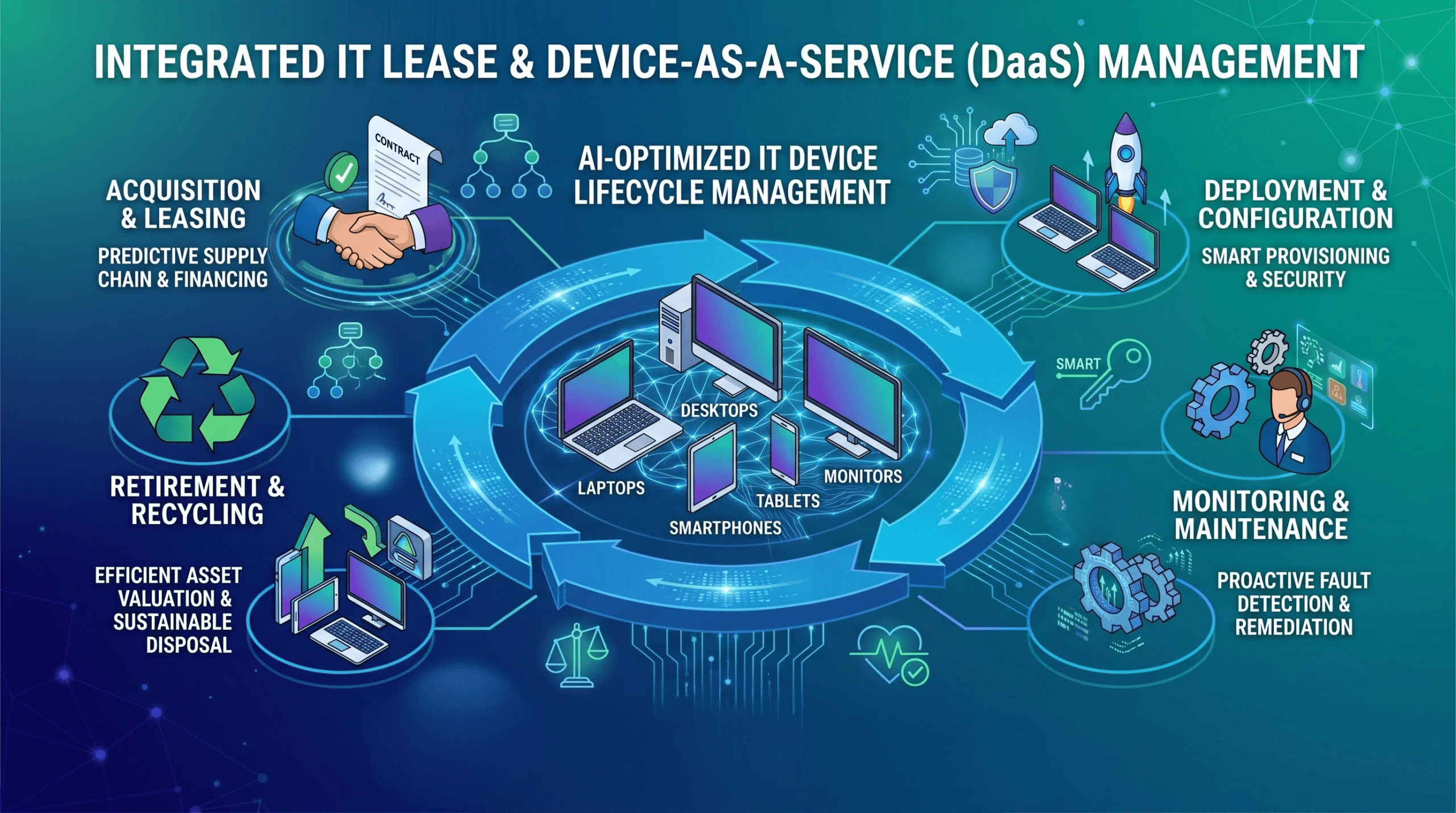
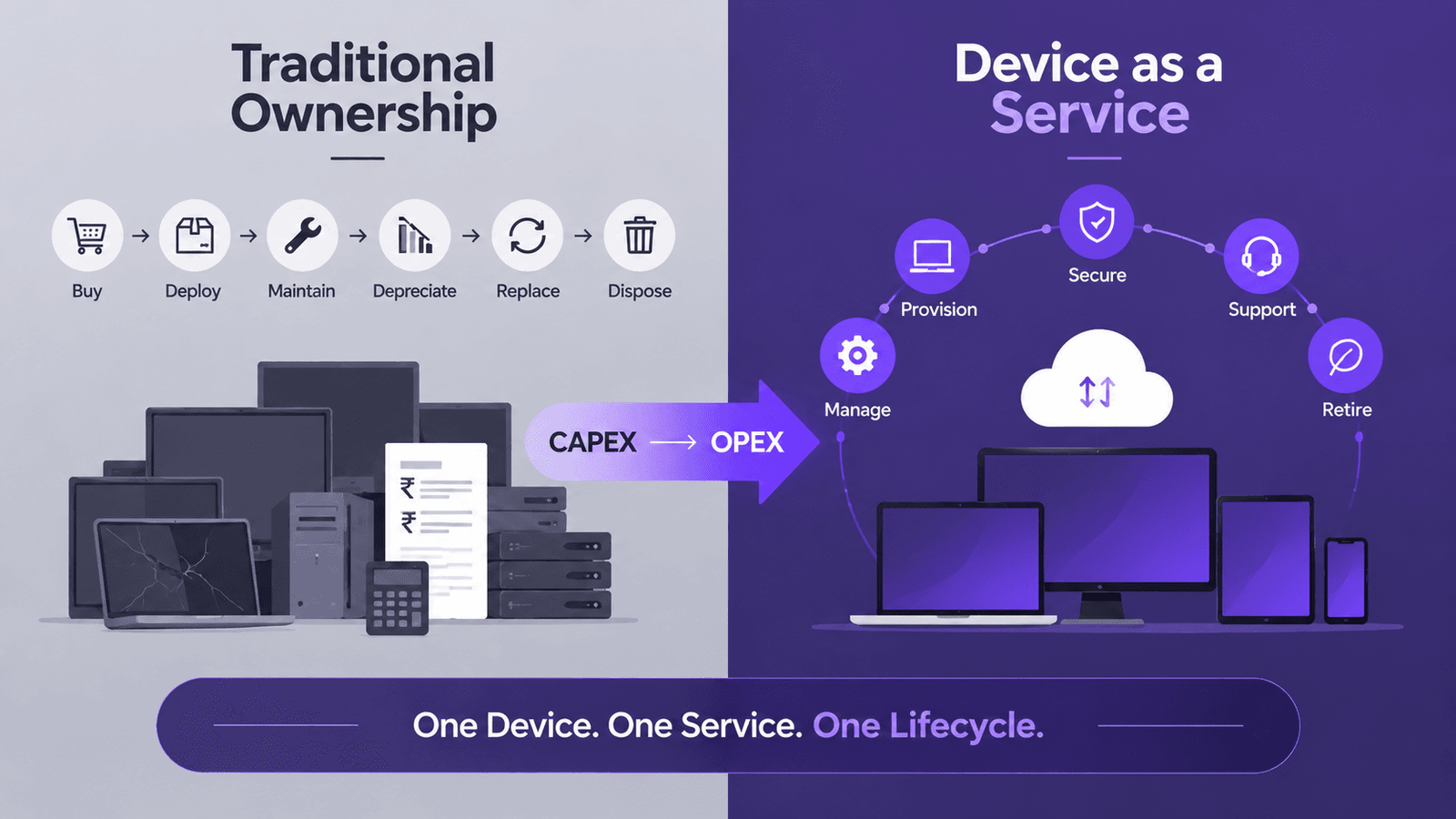
Hard ownership of corporate hardware is quietly becoming an operational relic. Instead of massive upfront capital sinks, modern organizations are rapidly shifting toward subscription models, treating laptops, workstations, and mobile infrastructure as a flexible, ongoing utility.
This pivot makes sense on paper for a mobile, hybrid workforce. But scaling these distributed setups introduces a massive logistical nightmare behind the scenes. Running multi-vendor deployments across borders means juggling varying lease terms, complex corporate tax rules, and fragmented refresh cycles.
Trying to manage this chaos with scattered spreadsheets is an invitation to compliance failures and financial leaks. To survive this shift, organizations are moving toward a dedicated IT Lease Management Platform to handle the heavy lifting. Standard tracking tools just can’t keep up; scaling efficiently demands a unified approach to Enterprise DaaS Operations that actively protects your bottom line.
DaaS Is No Longer Just an IT Operations Model
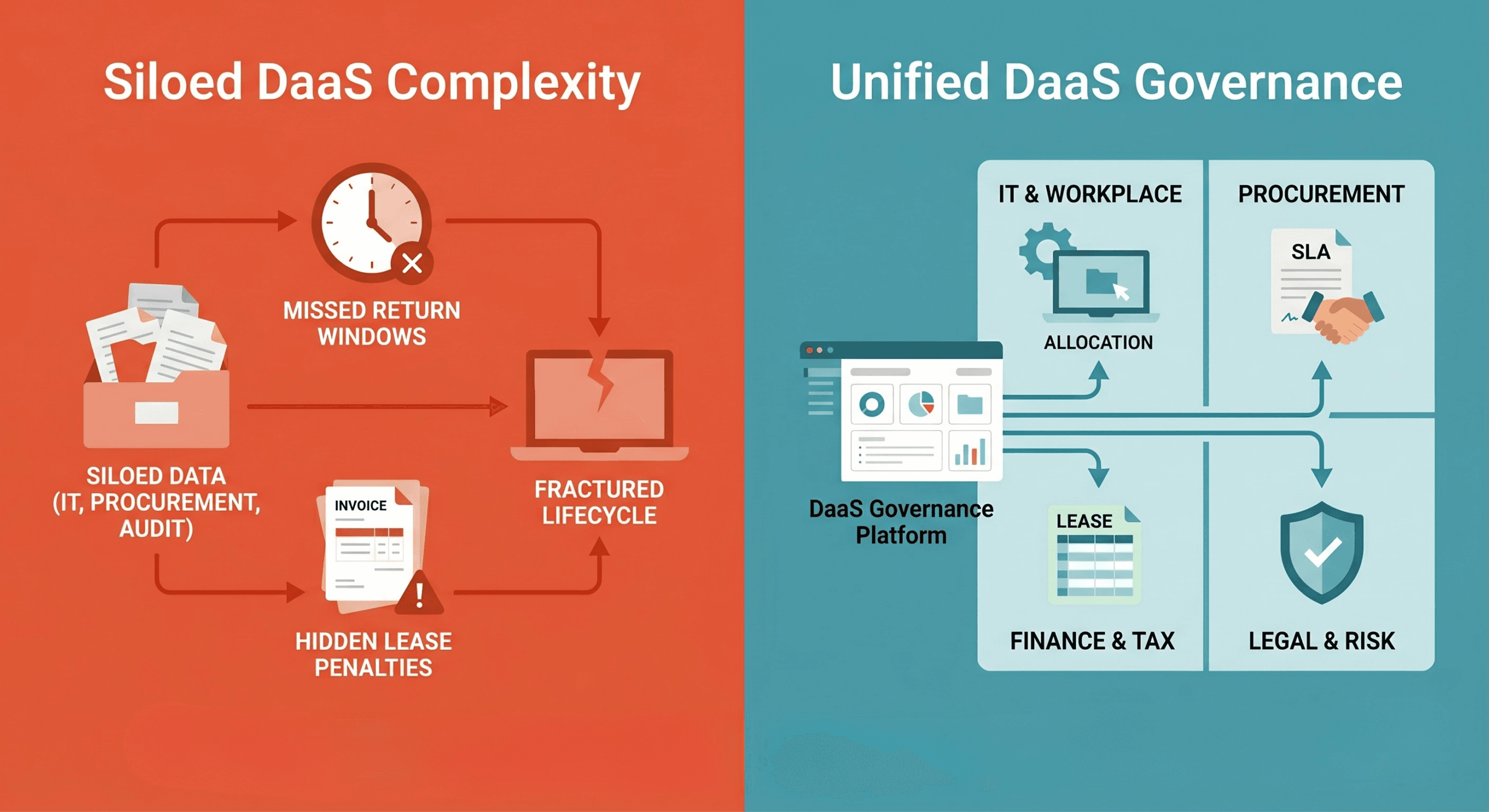
Externally, a hardware subscription looks like a simple way to provision laptops. Internally, it is a complex web of overlapping corporate responsibilities. When you move away from traditional asset ownership, your device management instantly morphs into a cross-functional workflow that ties multiple business units together:
Departmental Stakeholders | Operational Touchpoints |
IT & Workplace Operations | Deployment, active allocation tracking, and helpdesk support. |
Procurement & Vendors | SLA monitoring, contract negotiations, and multi-year sourcing commitments. |
Finance, Accounting & Tax | Lease accounting treatment, global depreciation models, and tax compliance. |
Legal & Risk Management | Global governance compliance, audit documentation, and data-secure disposal workflows. |
When these touchpoints operate in isolation, your device lifecycle breaks down. Siloed teams lose track of equipment locations, miss critical return windows, and accidentally trigger expensive lease penalties. Relying on generic inventory software to track these moving parts simply doesn’t work at scale. If your IT, procurement, and audit teams are operating from different data sets, your device strategy will inevitably fracture. Solving this requires a specialized DaaS Governance Platform that forces these cross-functional touchpoints into a single, cohesive workflow. It’s the only practical method for running a tight IT Asset Lifecycle Management framework without constantly battling hidden lease costs and communication gaps.
The Hidden Complexity Behind Enterprise DaaS Operations
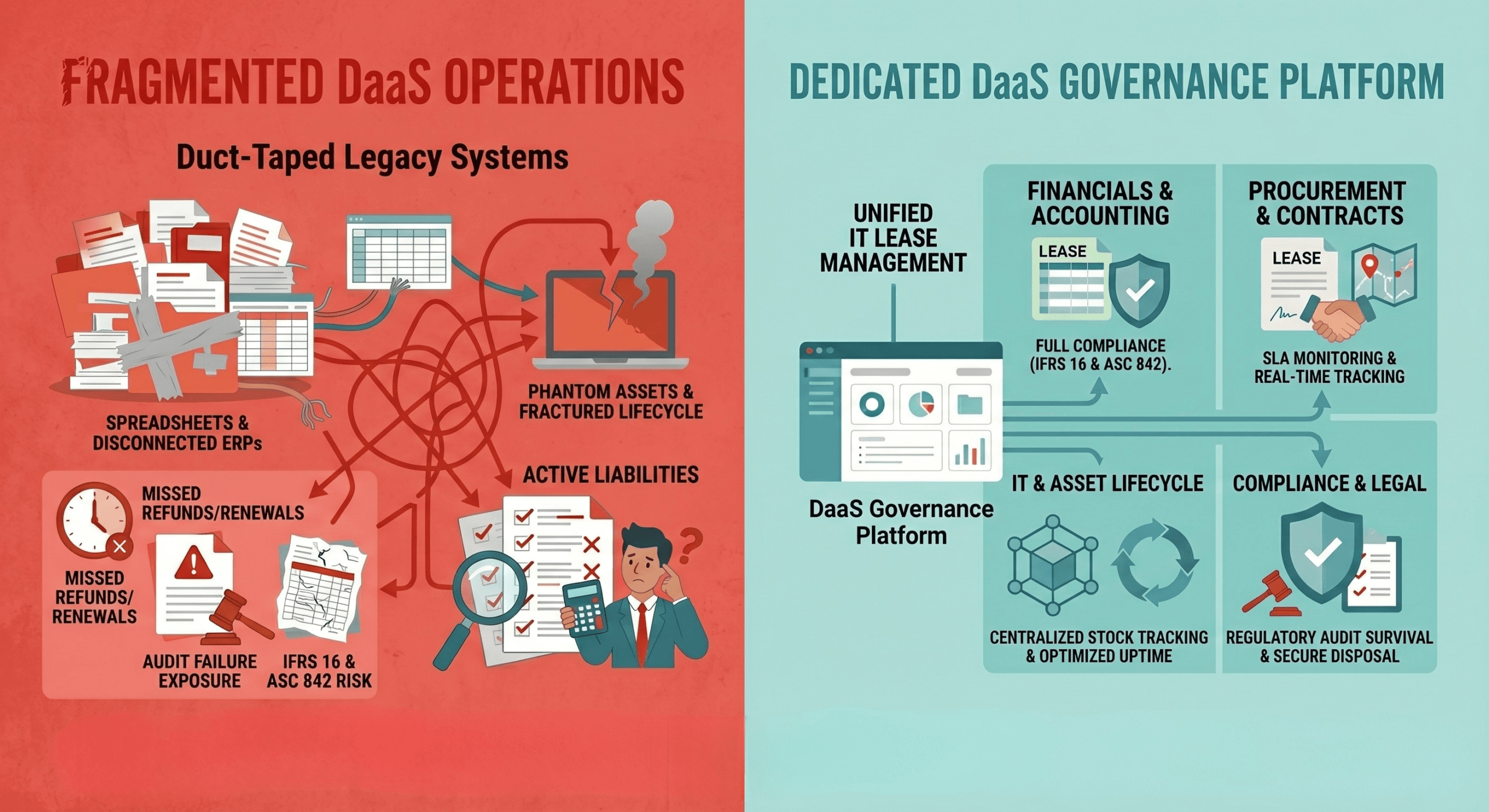
Most businesses manage Enterprise DaaS Operations by duct-taping ERPs, spreadsheets, and accounting tools together. This fragmentation creates massive blind spots. Finance teams cannot map physical laptops to specific lease contracts, leaving them blind to which devices are active, returned, or refreshed. Without a unified IT Lease Management Platform, tracking active liabilities and renewal timelines becomes impossible, exposing the organization to constant contract penalties and unmapped financial liabilities.
Relying on spreadsheets to meet strict IFRS 16 and ASC 842 rules is a fast track to an audit failure. But compliance is only half the battle. When you add broken vendor SLAs and chaotic device return deadlines to the mix, manual tracking completely falls apart.
That is why leading businesses are treating Enterprise DaaS Operations as a core operational strategy rather than a basic back-office accounting task. They are dumping disconnected trackers for a dedicated DaaS Governance Platform. Centralizing your financial logs, vendor contracts, and IT Asset Lifecycle Management into one real-time dashboard is the only practical way to stop lease penalties, kill off phantom assets, and survive your next regulatory audit.
The Impact of IFRS 16 and ASC 842
Regulatory updates like IFRS 16 and ASC 842 have completely rewritten the rules for device leasing. Organizations can no longer hide hardware subscriptions on expense sheets; they must accurately map right-of-use assets and track lease liabilities on the balance sheet. For global fleets, trying to calculate amortization manually creates severe audit risks. Compliance requires an intelligent IT Lease Management Platform that natively merges day-to-day Enterprise DaaS Operations with real-time financial reporting.
Why Traditional ITAM Tools Are Not Enough
Traditional ITAM software only tracks physical hardware, completely ignoring lease contracts, ASC 842 reporting, and financial liabilities. Meanwhile, accounting tools lack ground-level machine data. Managing modern Enterprise DaaS Operations requires a unified DaaS Governance Platform to bridge this gap, connecting daily IT Asset Lifecycle Management directly to financial compliance.
Introducing EZATLAS NEXUS-ITLM
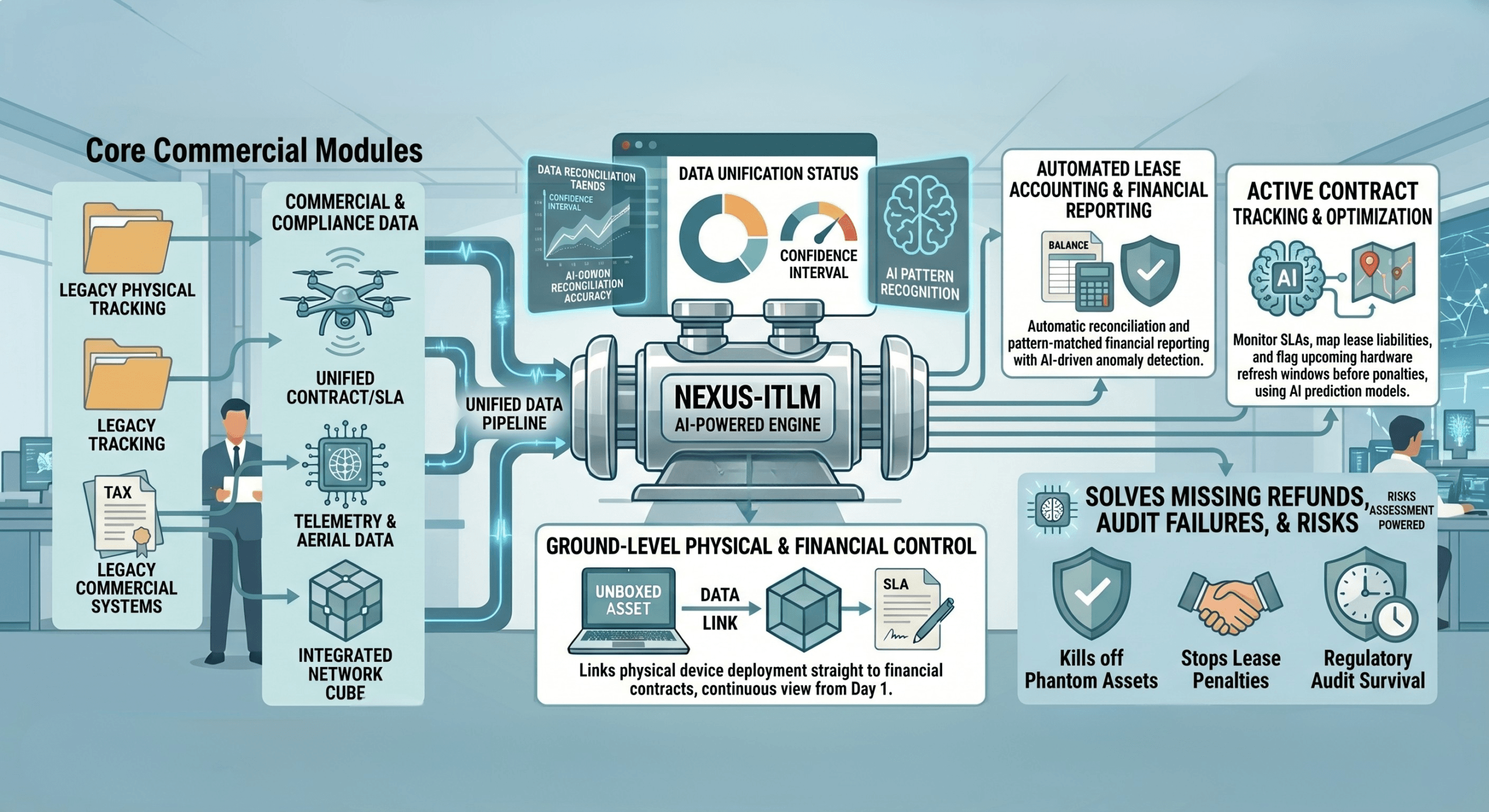
EZATLAS NEXUS-ITLM acts as the central engine for Enterprise DaaS Operations, unifying physical tracking with complex financial compliance. Instead of wrestling with fragmented software, the platform brings your core commercial operations under one roof:
- IFRS 16 and ASC 842 compliance: The platform handles your complex lease accounting automatically, stripping the manual guesswork out of balance-sheet reporting.
- Active contract tracking: It actively monitors vendor SLAs, maps your current lease liabilities, and flags upcoming hardware refresh windows before you trigger cost penalties.
- Ground-level asset control: This links your actual physical device deployment straight to your financial contracts, giving you a continuous view of your equipment from the day it’s unboxed.
Scale, Intelligence, and the AI Runway
Managing hardware becomes significantly harder when scaling to cross-border or multi-client environments. Global deployments introduce distinct regional compliance rules and complex device allocation structures. A dedicated DaaS Governance Platform solves this by enforcing strict contract segregation and global reporting frameworks across multiple business units.
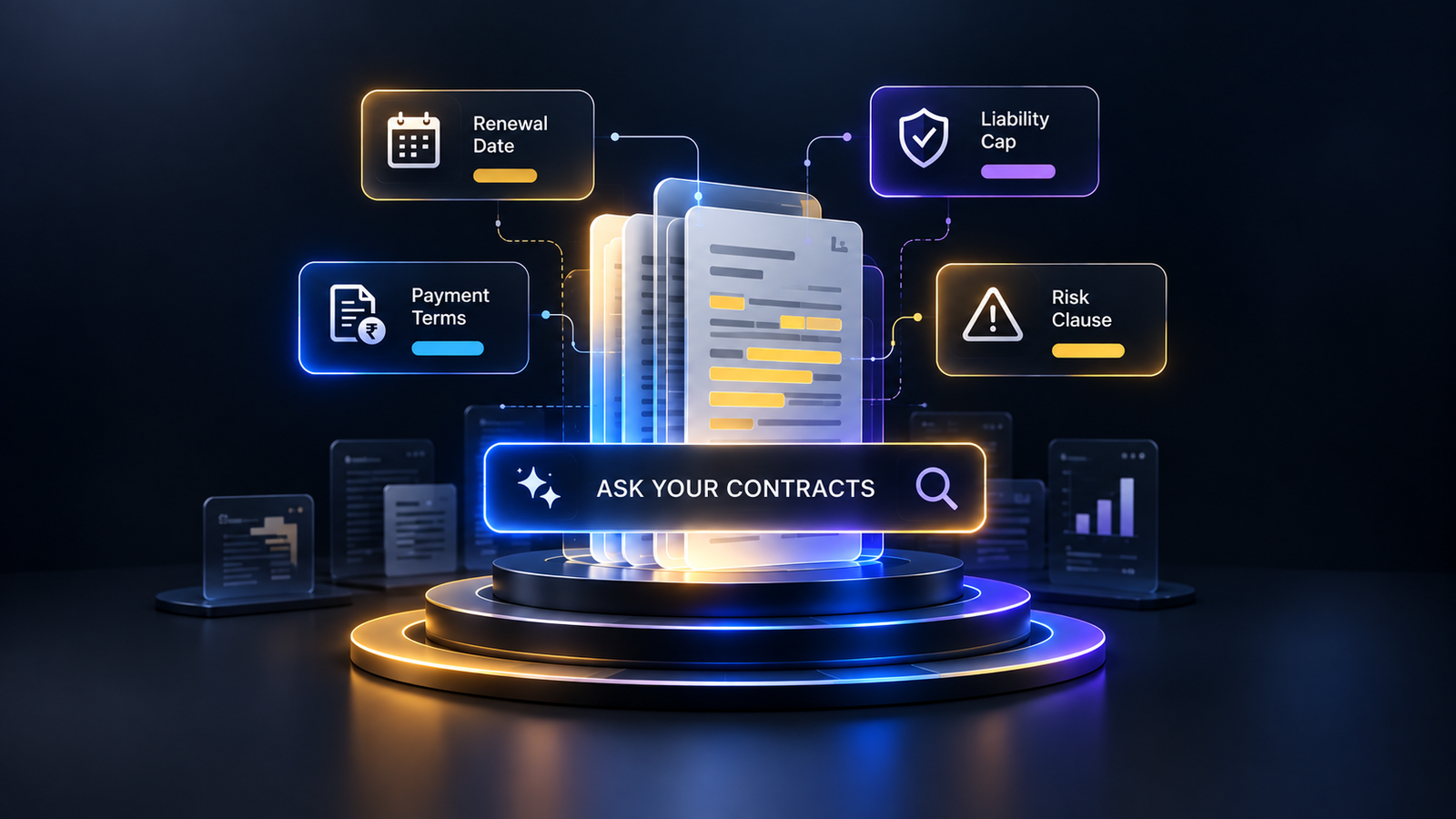
This unified data environment is also exactly what makes future AI tools actually functional. AI-driven contract summarization and predictive refresh tracking fail when trapped inside isolated spreadsheets. By tying your real-time asset tracking directly to your financial obligations, you build the reliable data foundation required to run automated, risk-managed, and highly optimized IT operations.
Conclusion
Treating hardware subscriptions like a basic procurement task is no longer sustainable. As compliance rules and fleet sizes scale, manual tracking becomes a massive financial risk. The shift toward a unified IT Lease Management Platform like EZATLAS NEXUS-ITLM fixes this. By tying asset governance, compliance, and vendor operations into a single loop, you finally turn chaotic Enterprise DaaS Operations into a scalable, audit-ready framework.
More Case Studies