Blogs

The Shift from Contact to Asset Based Leased IT Asset Management
Why Item Level Visibility Is the Key to Reducing DaaS Costs
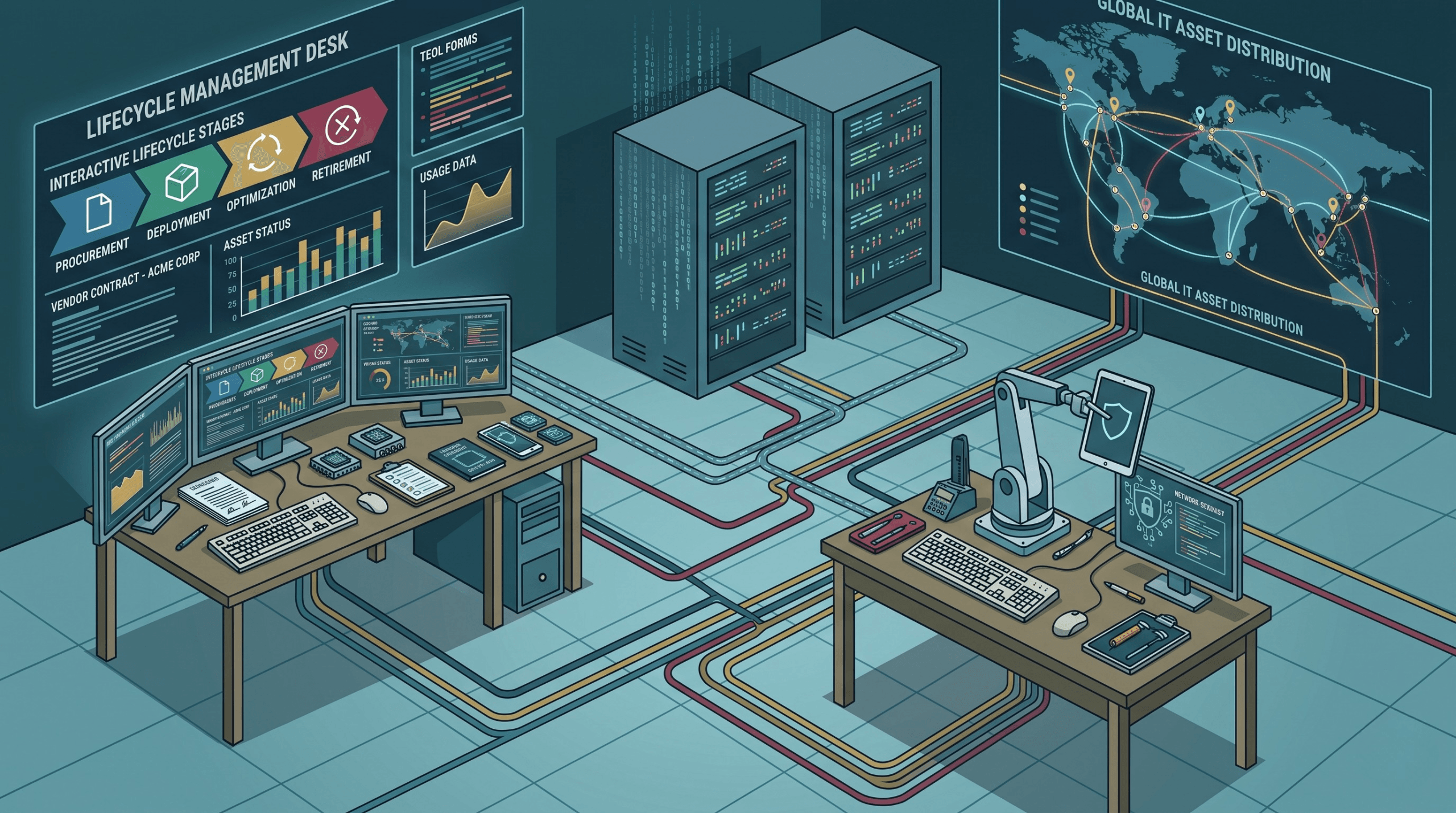
A lease contract does not generate day-to-day costs physical equipment does. A contract does not get lost in transit, demand an urgent hardware refresh, or trigger complex billing disputes on its own but physical equipment absolutely does.
Trying to run a supply chain on basic accounting software or standalone portals just causes blind spots. You need a unified Distribution Management System that actually ties your sales goals, rolling stock, physical warehouses, field distributors, and end customers together. EZATLAS SALIO handles this tracking automatically, protecting your margins and streamlining the fulfillment loop from start to finish. Customer loyalty depends heavily on delivery execution—buyers remember how quick and straightforward it was to get their order.
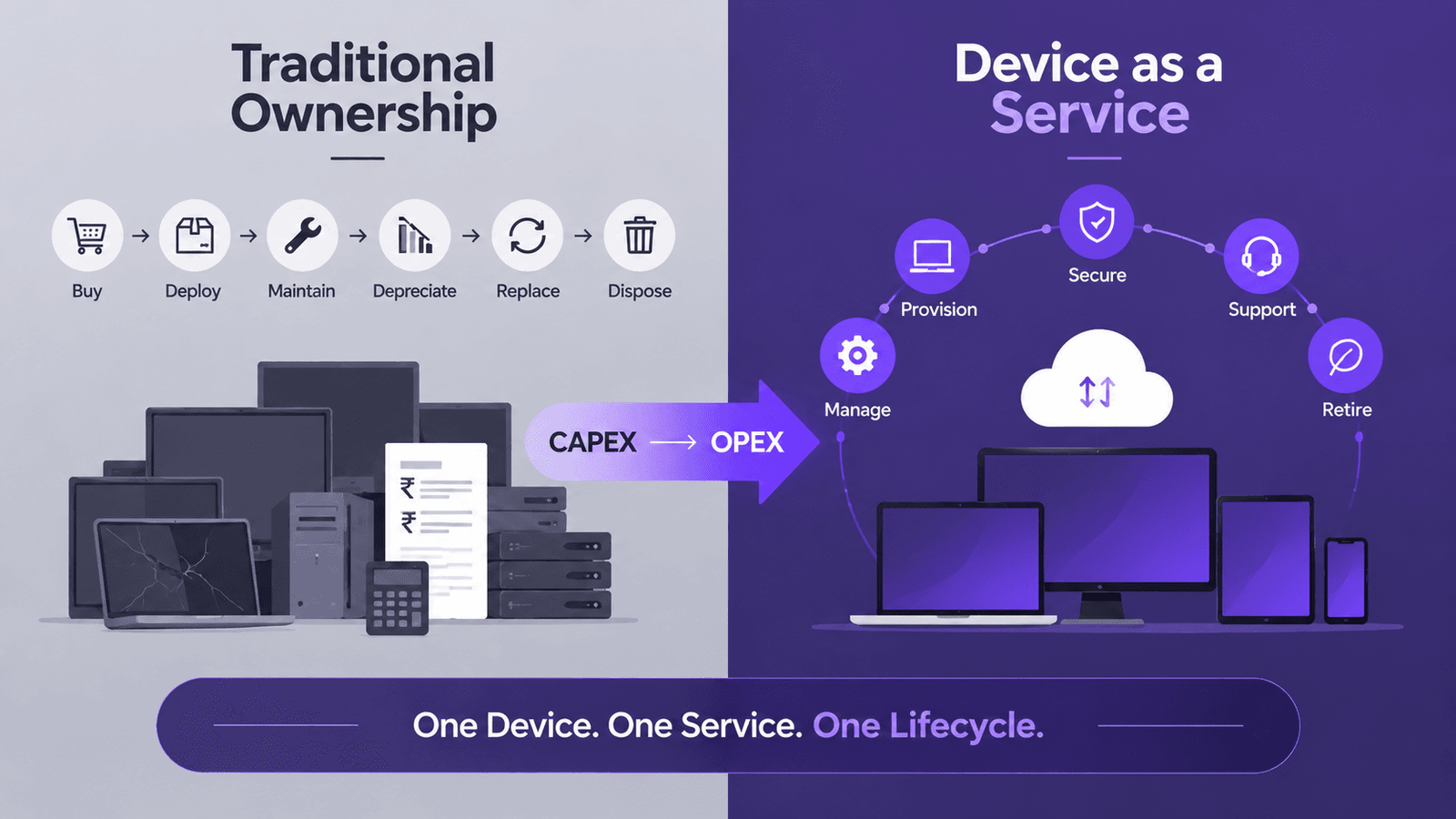
However, the explosive rise of flexible workplace models, massive global device rollouts, and strict compliance rules has exposed a glaring flaw in this strategy. The true financial weight of a lease never happens at the contract level—it happens down at the individual machine layer. Every notebook, corporate desktop, tablet, and smartphone carries its own distinct operational lifecycle, cost setup, usage history, upgrade window, and end-of-term value. Managing these dynamics requires modern Lease Lifecycle Management that focuses on real-world asset behavior rather than static paperwork.
Why Contract-Level Tracking Fails
Static spreadsheets fall behind fast. They only work if someone remembers to manually type in an update every time a device shifts to a new user, breaks down, or goes back to the supplier. When people inevitably miss those updates, your buying logs, open helpdesk tickets, and actual vendor bills stop matching up completely. Finance teams end up spending days digging through old email threads trying to cross-reference serial numbers against master lease agreements just to approve a single monthly vendor payment.
Picture a standard corporate contract covering a batch of 5,000 corporate laptops. That legal document outlines total contract value, lease windows, monthly fees, and return rules perfectly. This disconnect doesn’t just drain your team’s administrative hours; it actively drains your budget. To protect your bottom line, you need clear answers to individual operational questions:
- Which exact machines are active online right now?
- Which devices have been lost or reallocated?
- Have specific batches already been returned or upgraded?
- Are we paying recurring lease fees for hardware sitting unused in a storage closet?
- Which specific line-item charges on this month’s massive invoice tie back to which live device?
Without a dedicated DaaS Management Platform, accounting and operations teams are forced to run multi-million dollar budgets on guesswork instead of hard data.
The Hidden Drain of Asset Blindness
Most organizations only realize their tracking is broken during an intense internal audit or at the final contract renewal window. This structural blindness regularly causes significant, unnecessary financial drain:
- Ghost invoices: You return old hardware to the supplier, but because of a manual reporting slip, you continue to pay for those devices month after month.
- Vanishing assets: Your system claims a laptop is with an employee who resigned last quarter. But because there is no link between the lease and live tracking, no one can pinpoint who actually has the physical machine.
- Refresh Overlaps: The company provisions brand-new worker setups while accidentally continuing to pay the rolling subscription fees on the old, decommissioned units.
- Blind Invoice Approval: Accounts payable receives thousands of line items that are impossible to verify manually, leading to duplicate billing approvals.
Mastering Asset-Level Economics
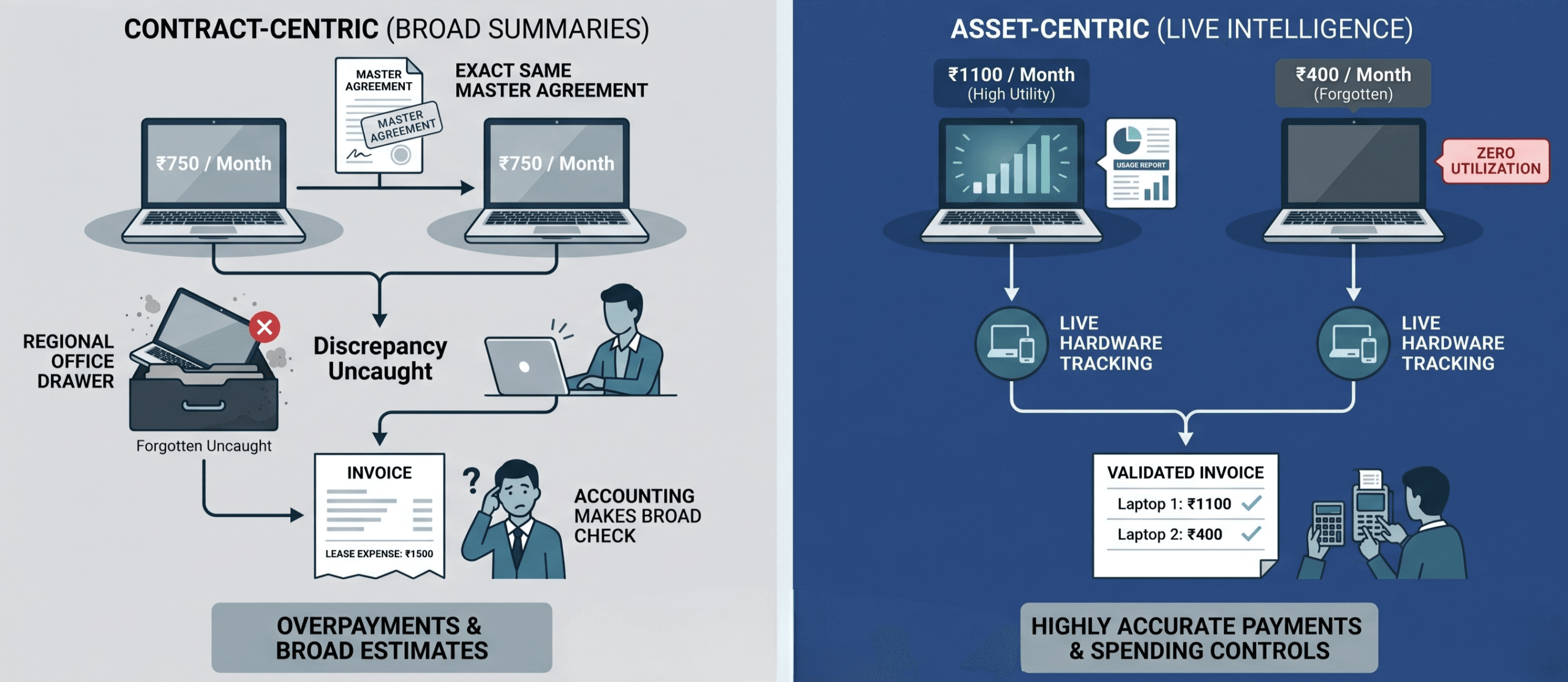
The true financial outcome of an Operating Lease Software deployment comes down to individual device utility. Two laptops rolled out under the exact same master agreement can deliver entirely different returns on investment. One might be actively utilized by a field representative every single day, while the second sits forgotten in a regional office drawer while continuing to run up monthly lease expenses. General contract summaries can never catch these profit-draining discrepancies—but live asset-level intelligence does.
Transitioning to an asset-centric model gives accounting teams the data they need to match every incoming invoice to a verified piece of live hardware. Instead of relying on broad monthly estimates, payment validation becomes highly accurate, eliminating overpayments and tightening general corporate spending controls.
Driving the Future of IT Leasing
Contracts will always serve a clear purpose they define your baseline legal agreements and commercial commitments. But day-to-day operational control, strict financial oversight, invoice verification, and lifecycle accountability require automated asset tracking.
Shifting to this automated approach gives your enterprise absolute financial clarity, simple audit trails, and streamlined end-of-life logistics. A lease contract might outline the partnership terms, but the physical assets dictate your actual business economics.
More Case Studies