Blogs

How a Leading Retail Chain with 800+ Stores Achieved End-to-End Operational Visibility
Retail Operational Visibility with Source-to-Pay and Asset Management
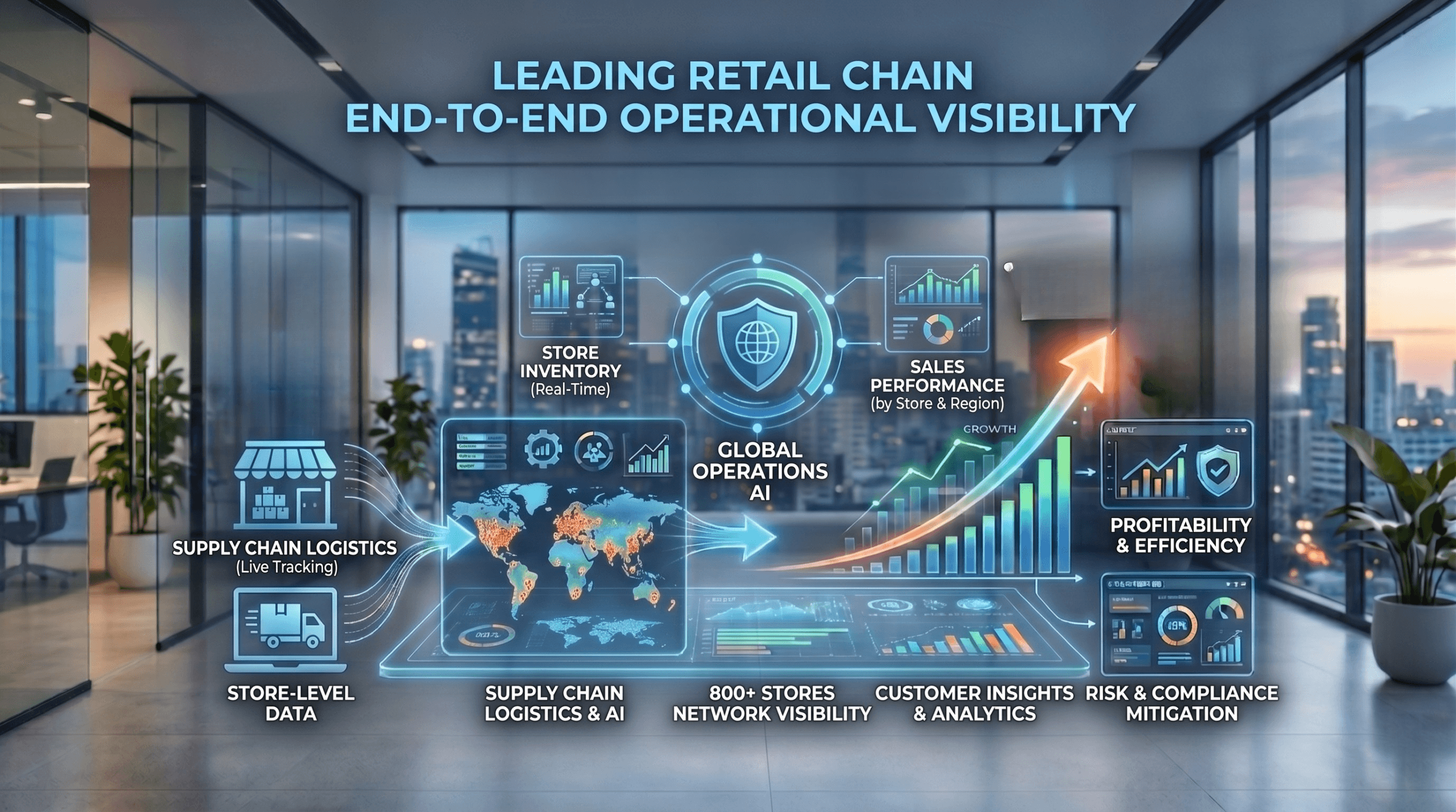
Managing a retail presence across hundreds of storefronts introduces deep layers of logistical friction. While buying teams focus heavily on bulk supplier deals, regional storage hubs have to coordinate fast moving inventory lines to keep shelves stocked. At the ground level, local managers handle thousands of active workplace devices—everything from checkout terminals and staff laptops to barcode scanners, printers, and store-level networking infrastructure.
Even when separate teams manage their own tasks well, corporate leaders still struggle to get a clear, immediate view of core business metrics:
- What exact equipment was purchased this quarter?
- Where is the incoming inventory being held right now?
- Which specific retail outlet received those newly deployed assets?
- Who holds administrative accountability for those devices on-site?
- What is our actual, real-time stock position across regions?
- How much total operational spend is currently being monitored?
This exact visibility gap caused massive friction for a major consumer electronics chain in India. They were trying to oversee 800 storefronts, regional warehouses, and thousands of devices using completely separate trackings.
The Challenge
While the business scaled rapidly across geographic regions, its underlying operational workflows remained heavily fragmented. Purchasing decisions happened completely independently from central warehouse operations. Stock visibility existed strictly inside warehouse walls, completely disconnected from real-time asset tracking or store-level deployment logs.
Vital workplace infrastructure such as retail POS terminals, laptops, scanners, and local networking frameworks was managed through a patchwork of loose spreadsheets and conflicting software systems.
- This disconnected strategy triggered significant corporate pain points:
- High-level visibility into corporate procurement remained highly restricted.
- Verifying real-time inventory balances required constant manual coordination.
- Pinpointing exact asset accountability became near impossible across hundreds of active sites.
Executive teams simply couldn’t audit daily store data from one spot. Sustaining their fast growth required a software setup that linked procurement data directly to warehouse tracking and store-level asset rules.
The Solution
The corporate team integrated the EZATLAS ATLA and EZATLAS NEXUS applications to build a centralized, end-to-end operational framework across India.
A Centralized Source to Pay Platform
Deploying EZATLAS ATLA allowed the company to completely standardize its core purchasing lifecycle—unifying vendor sourcing, manager approval routings, purchase order creation, direct supplier communication, automated goods receipts, and invoice verification. This shift gave finance leaders immediate, centralized control over enterprise spend and all active purchasing trends.
An Integrated Warehouse Management System
Integrating distribution center activities opened up instant, real-time inventory tracking across every single regional supply depot. Everyday stock relocations, immediate item availability, automated stock replenishment runs, and local warehouse transactions became perfectly traceable through one single interface.
Enterprise-Grade Asset Management Software
Using the specialized capabilities of EZATLAS NEXUS Asset Operations, the business successfully mapped the complete operational lifecycle of every device from initial order receipt and on-site setup to location transfers, routine maintenance runs, compliance audits, and eventual decommissioning. Every piece of hardware could now be instantly traced back to a specific distribution hub, retail store front, operational division, or individual user.
The Business Impact
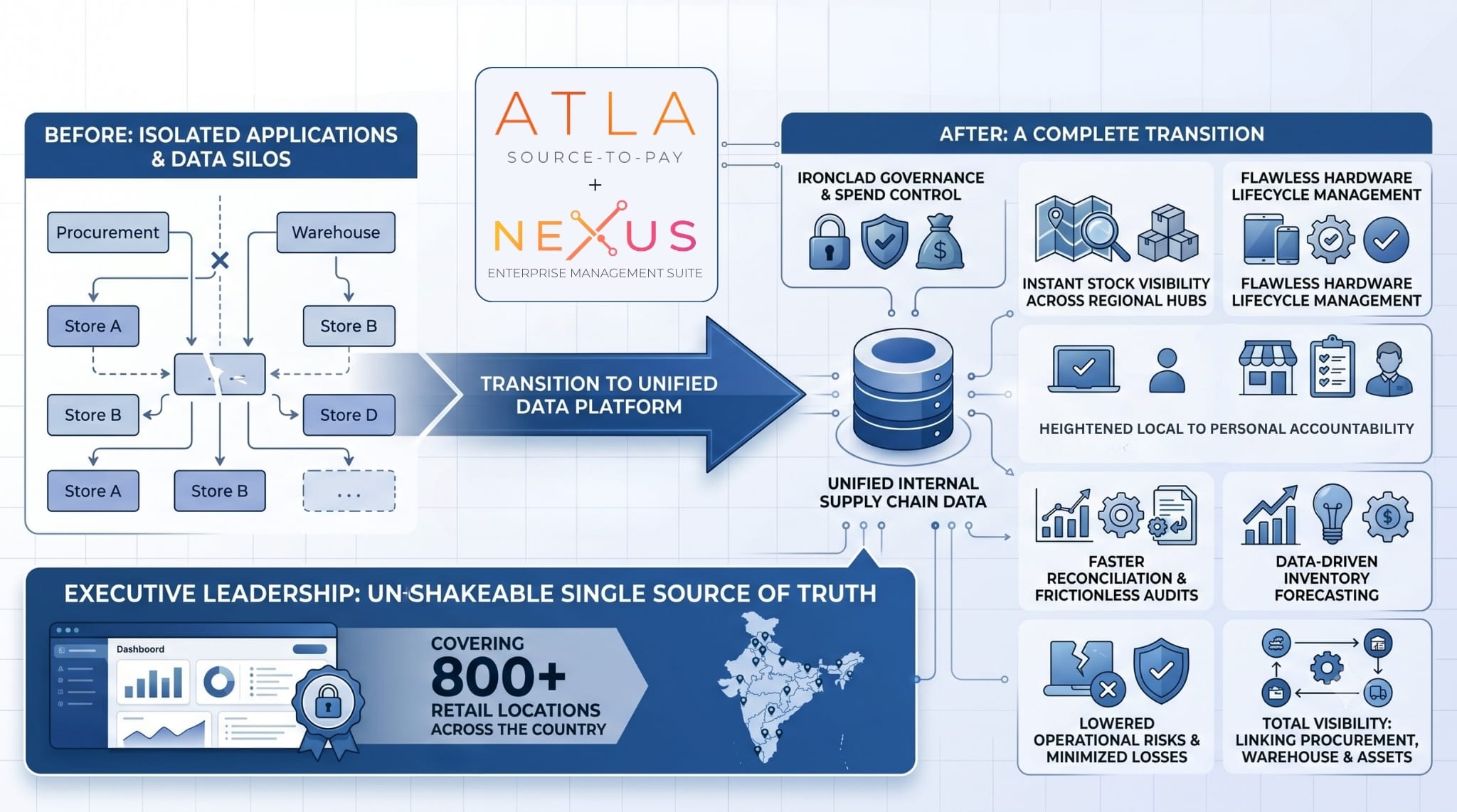
Transitioning away from isolated applications completely modernized how the company views its internal supply chain data. The company unlocked definitive competitive advantages:
- Ironclad corporate procurement governance and spend control.
- Instant stock visibility across all regional hubs.
- Flawless lifecycle management for all deployed hardware.
- Drastically heightened personal accountability at the local store level.
- Faster data reconciliation and frictionless operational audits.
- Data-driven inventory forecasting that lowered excess stock costs.
- Considerably lowered operational risks and minimized equipment losses.
- Total visibility linking procurement data, warehouse stock, and on-site assets.
Most importantly, executive leadership established an unshakeable, single source of truth covering more than 800 retail locations across the country.
The Future of Retail Operations Management
For retail brands scaling nationally, growth isn’t as simple as signing new property leases and opening more store fronts. Long-term success depends entirely on how well you track your buying channels, warehouse centers, stock data, and store hardware. Connecting these core areas through a single data setup is the only way to genuinely protect profit margins, cut out hidden losses, and expand your business smoothly.
At EZATLAS, we help modern enterprise retailers turn siloed, broken processes into perfectly synchronized internal ecosystems through our fully integrated Source-to-Pay, Warehouse Management, and Asset Operations platforms.