Blogs

Source-to-Pay Platform vs Traditional Procurement Software: What's the Difference?
Comparing source to pay platforms with traditional procurement software
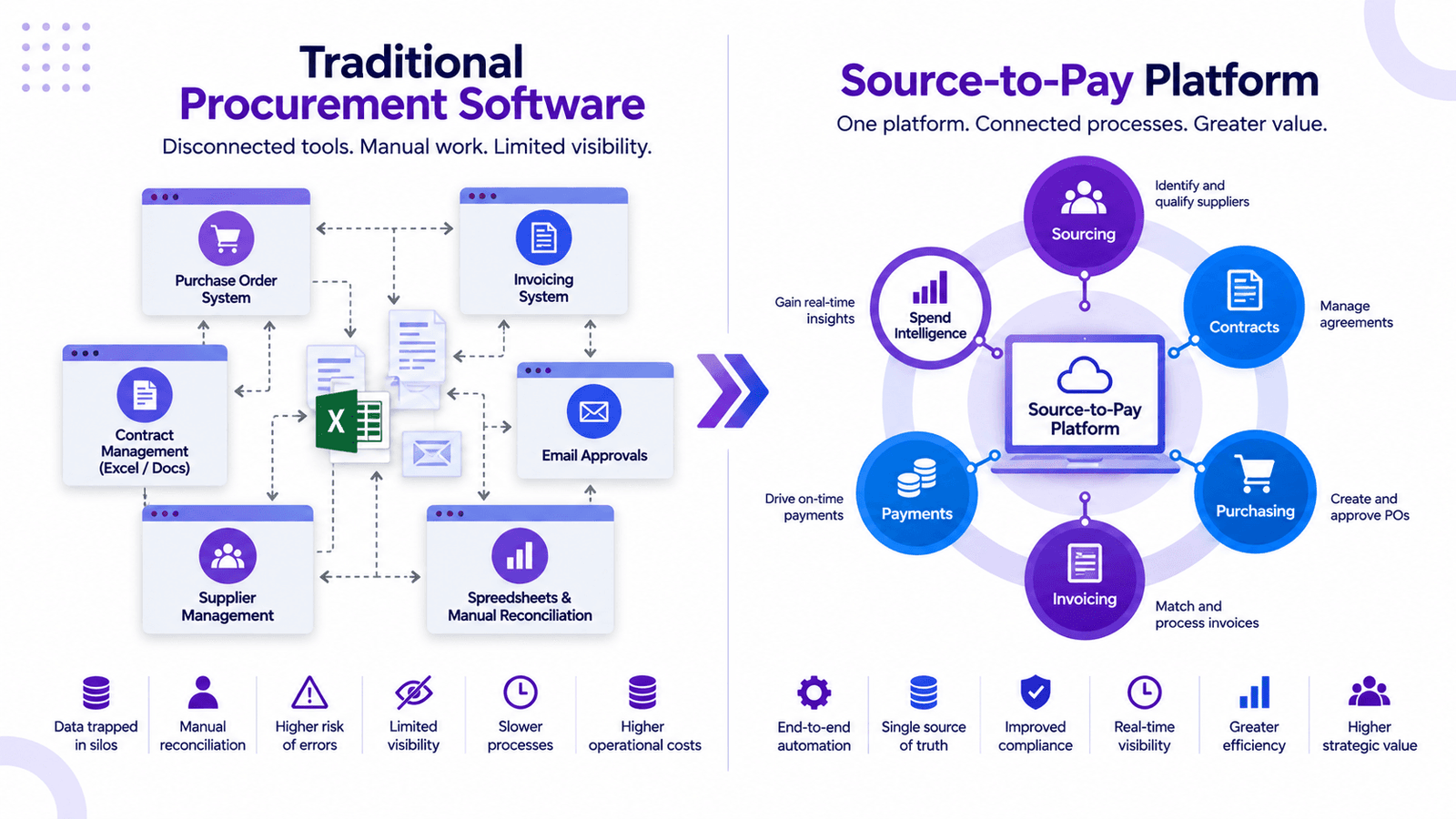
“Procurement software” has turned into a meaningless umbrella term. Buyers assume a feature is a feature until they run into the massive gulf between an old-school purchasing tool and a real Source to Pay platform. Usually, that realization hits at the worst conceivable time: midway through a contract showdown or an audit check, right as the team discovers critical data is stranded across three separate databases.
What "Traditional" Actually Means Here
Old-school setups rely on point solutions held together by habit: dedicated software for purchase orders, an entirely separate portal for invoicing, and the inevitable messy Excel tracker for contracts. On their own island, each tool works just fine. The problem is what happens between them. A purchase order gets approved in one system, the invoice lands in another, and someone on the finance team ends up manually checking that the numbers actually match. Multiply that across a few hundred purchases a month and you’ve got a full-time reconciliation job that shouldn’t exist.
This isn’t a knock on the tools themselves, many were built well for a narrower job. It’s a design failure at the foundational level. The systems simply don’t sync in real time. That means whenever work moves down the line, from negotiated contract to purchase order to outgoing wire, somebody has to step in and push the data through by hand.
What a Unified Platform Changes
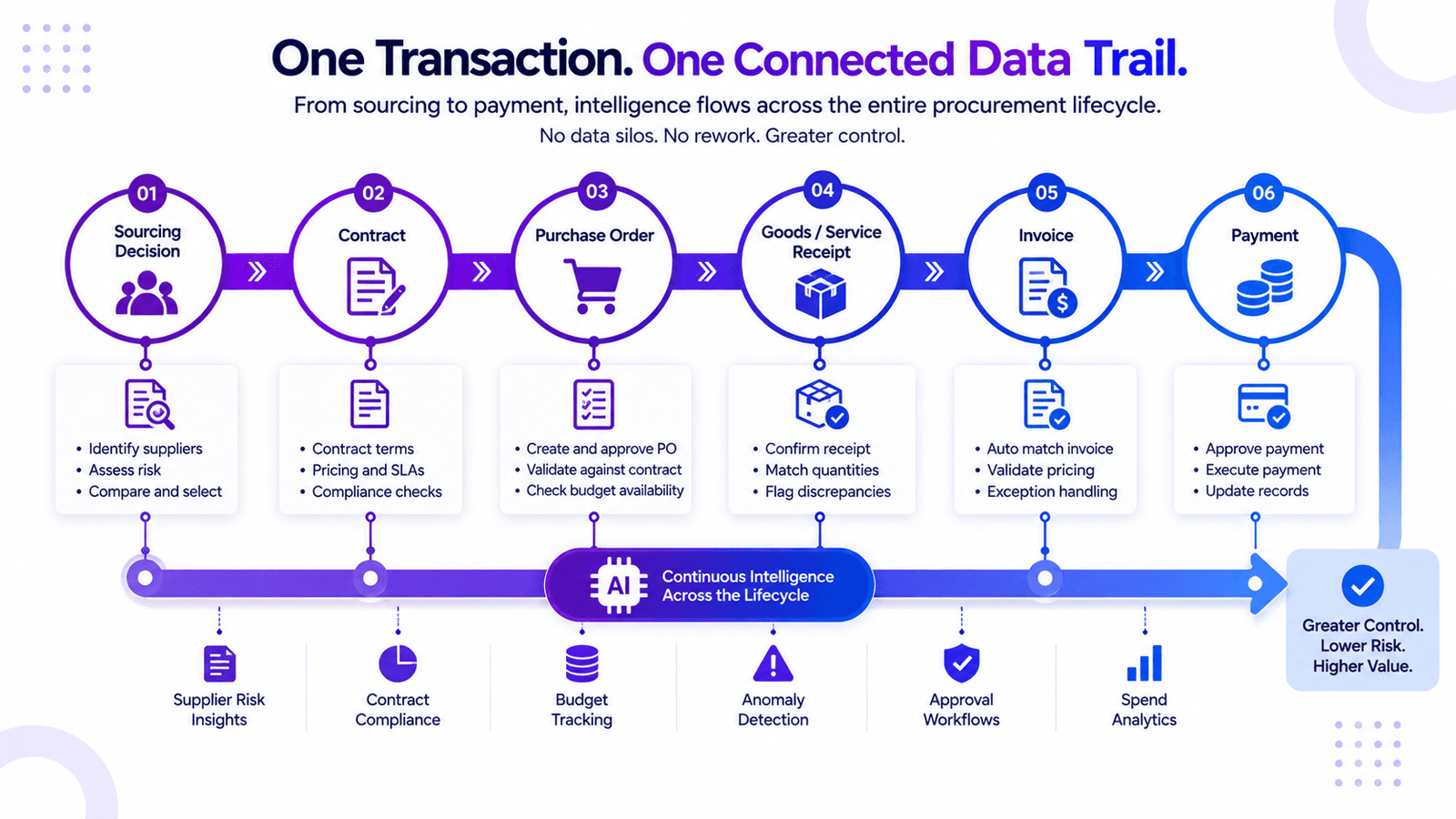
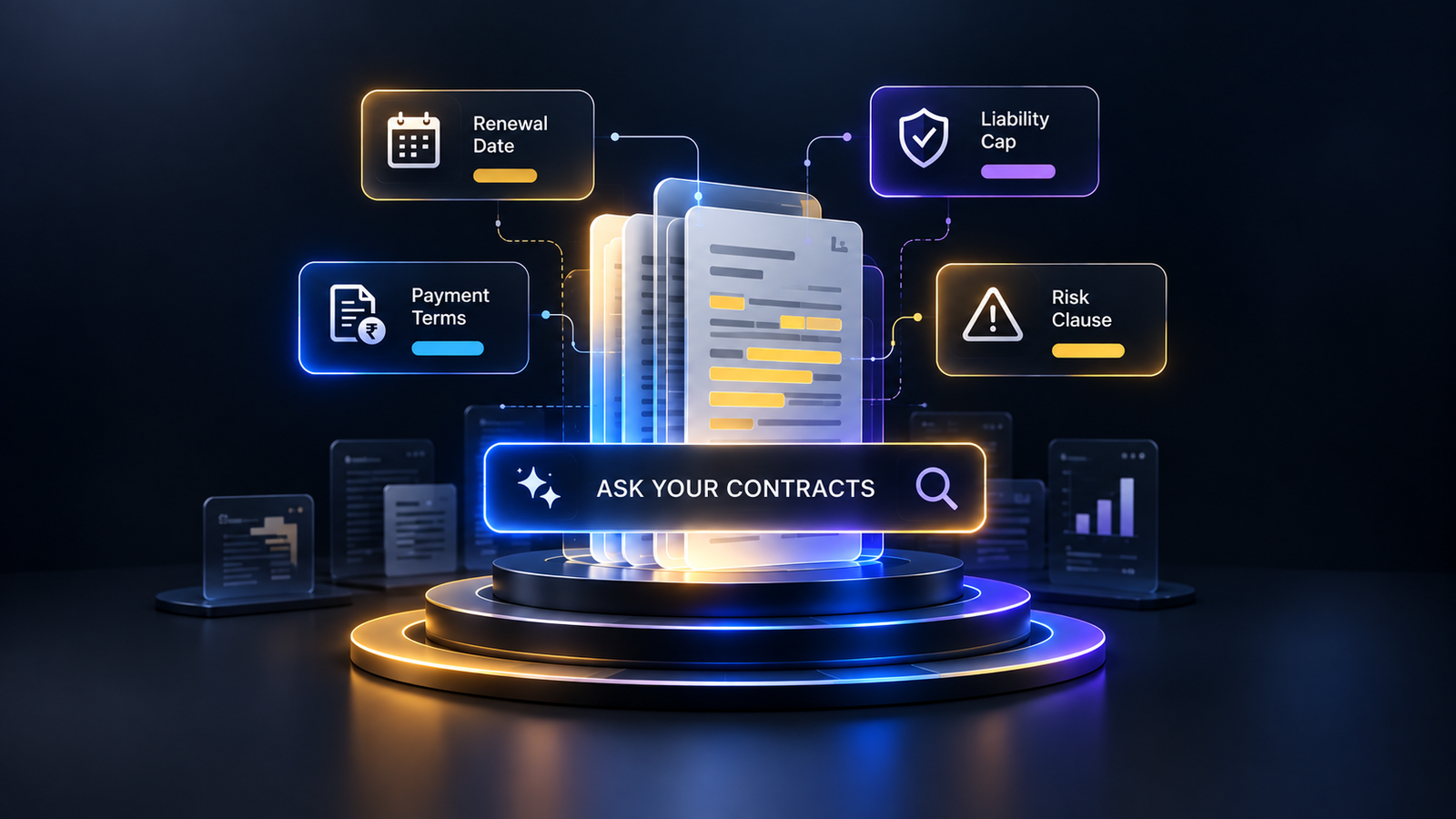
A true S2P platform consolidates sourcing, contracting, purchasing, and invoicing into one connected system rather than a chain of separate tools. That sounds like a semantic distinction until you look at what it enables in practice. Procurement software budgets are slated to surge past double their current size heading into the 2030s. The real story isn’t the spend, it’s where the money is going. Point solutions are losing out as enterprise dollars pour into unified platforms simply because the ROI on ripping out software sprawl is too compelling to pass up.
The practical difference shows up in three places:
Data flows without manual re-entry. A contract negotiated during sourcing automatically governs the pricing terms an invoice gets matched against later. Nobody has to re-key numbers or cross-check a PDF.
Approvers hate switching tools. It’s that simple. When remaining budget numbers show up on the sign-off screen itself, decisions take seconds. You don’t have people hunting down logins or bugging finance on Slack—which is exactly why native platforms see real adoption while cobbled-together tech stacks get ignored.
One audit trail, not five. When every action — sourcing decision, contract change, approval, payment — lives in a single system of record, reconstructing a transaction for an audit takes minutes instead of a week of pulling exports from different tools.
Where Source to Pay Automation Fits In
This is really where the two categories diverge most sharply. Traditional software automates individual tasks — auto-generating a PO number, sending an approval email. Source to Pay Automation works differently: it connects automation across the entire lifecycle, so a supplier risk flag raised during sourcing is still visible when that same supplier’s invoice comes up for payment months later. The intelligence doesn’t reset at each handoff point the way it does in a fragmented stack.
That distinction matters more in 2026 than it did a few years ago, because AI-driven spend classification and anomaly detection only work well when they have the full picture. An automation layer bolted onto disconnected tools can only ever see part of the transaction — a unified platform gives it the whole thing.
The Case for Procurement Process Automation Across the Full Cycle
Zoom out further and the real argument for a unified platform is about Procurement Process Automation end to end, not automation at isolated checkpoints. A traditional stack might automate invoice matching reasonably well while leaving supplier onboarding almost entirely manual, because that module was never built to talk to the others. A connected S2P platform applies the same automation logic — rules, approvals, anomaly detection — consistently from the first sourcing event through final payment, which is what actually compounds into measurable time savings rather than isolated pockets of efficiency.
So Which One Do You Need?
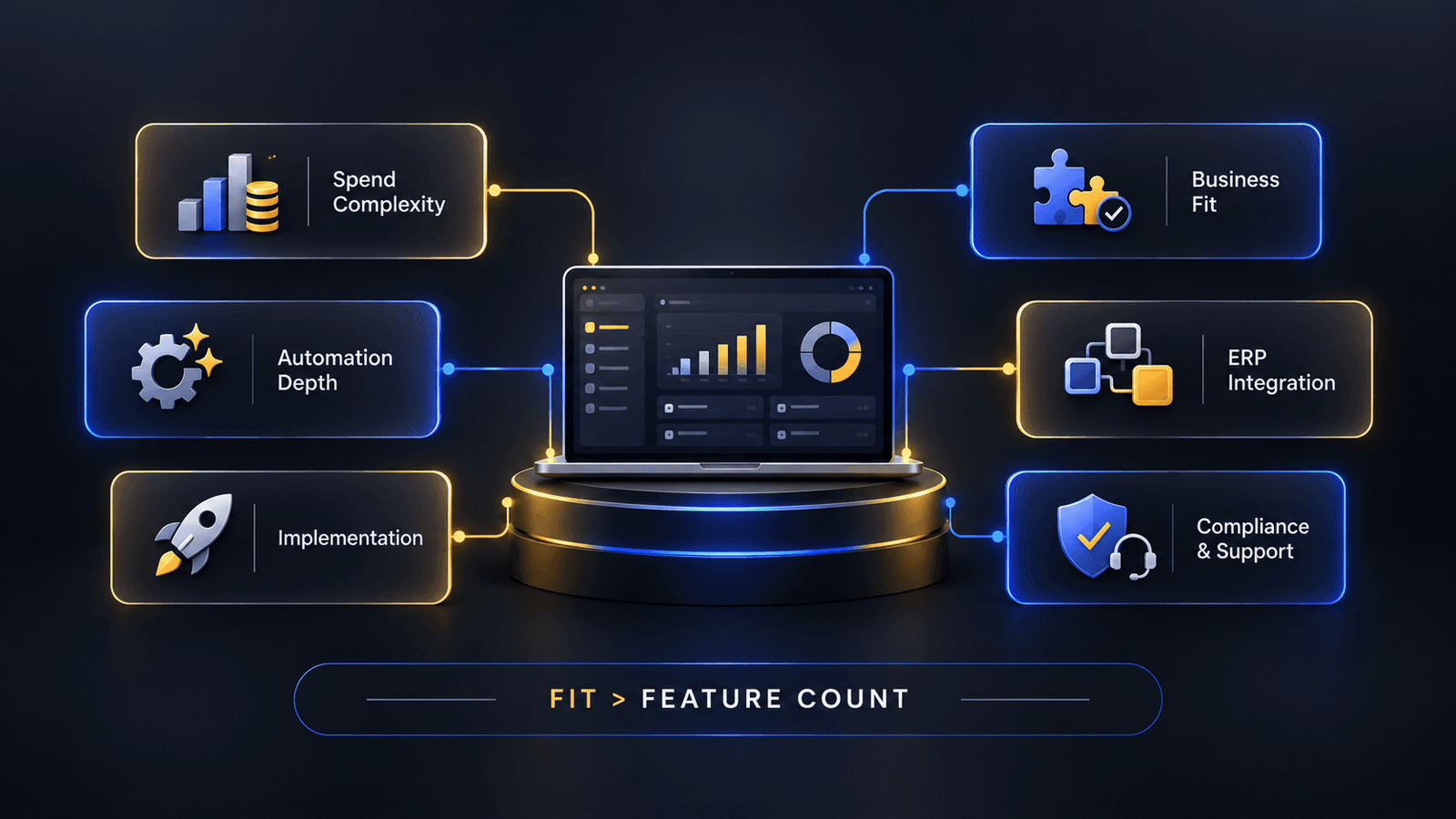
Lean setups don’t need heavy tech. If your purchasing volume is tiny, buying an all-in-one platform is total overkill—a lightweight point tool gets the job done. The breaking point hits when you scale up. Throw in cross-border vendors, multiple department budgets, and convoluted contracts, and the DIY spreadsheet route becomes a massive financial drain through payroll waste and sheer audit liability. Platforms like ezAtlas’s ATLA are built around exactly this consolidation logic — combining procure-to-pay with sourcing, contracts, and spend intelligence in one system rather than asking your team to stitch the pieces together themselves.
The honest test is simple: if reconciling last month’s spend takes your team an afternoon of cross-referencing five different exports, you’re already paying the cost of a traditional stack — you’re just paying it in hours instead of an invoice. If that sounds familiar, it’s worth seeing a unified platform in action before renewing whatever fragmented setup you’re running today.
More Case Studies