Blogs

DMS vs SFA: Understanding the Difference in Sales and Distribution
Here’s a quick reality check for anyone tracking IT leases across scattered folders and spreadsheets
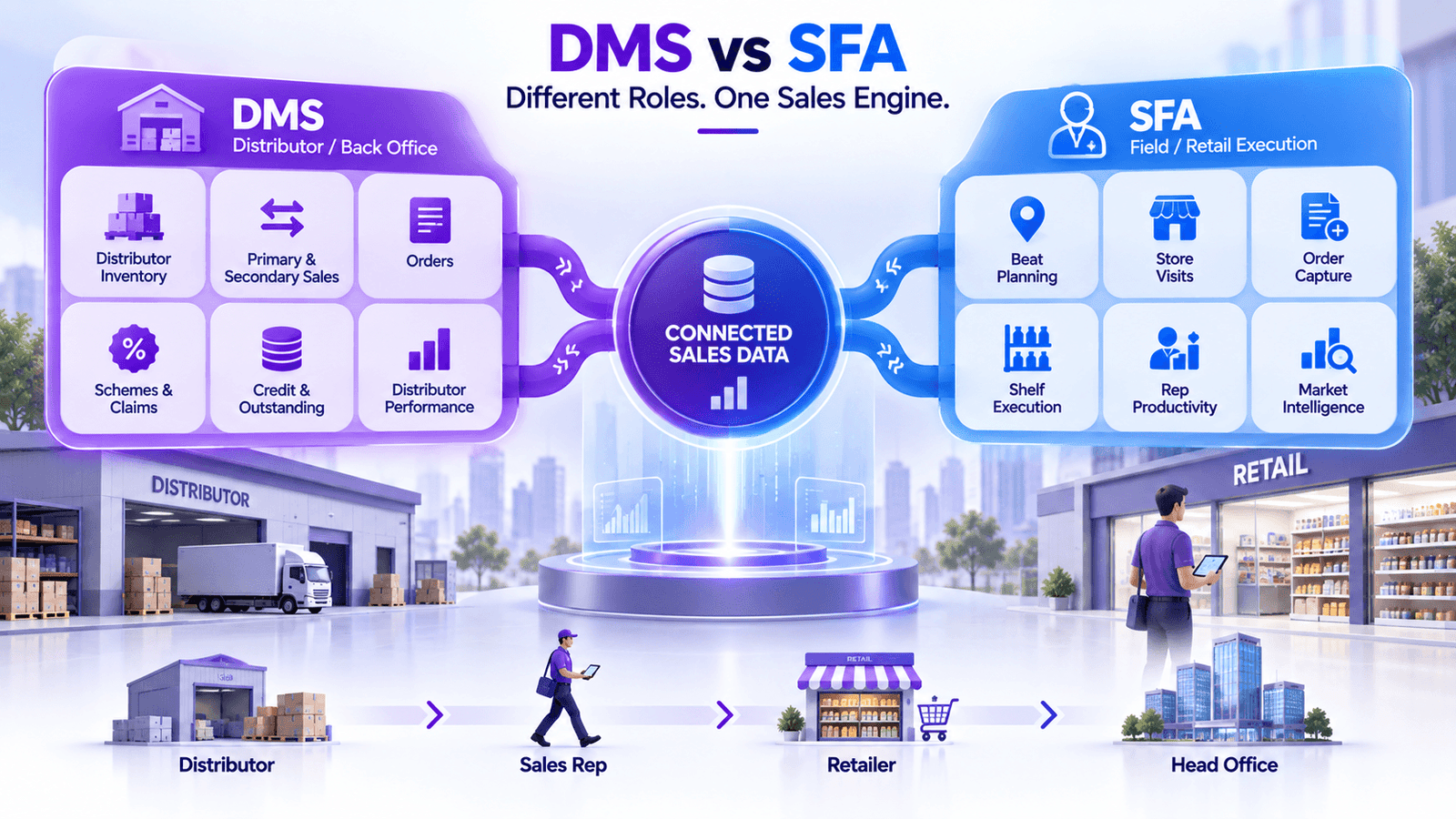
Walk into almost any FMCG or consumer goods company evaluating Sales and Distribution Software, and you’ll hear DMS and SFA used almost interchangeably, as if they’re two names for the same thing, or two competing options you pick between. Treating these as an “either/or” choice is a trap. They tackle distinct operational problems at opposite points in the channel. In reality, once you reach real scale, you need them working in tandem, not competing for the same job. Mixing them up is an expensive, remarkably common mistake during tech implementations. Here is the actual split in what they do day to day.
What a Distributor Management System Actually Covers
A Distributor Management System manages the commercial relationship between a brand and its distributors: orders, inventory, schemes, claims, and the financial side of the channel. It handles primary sales, which is the movement of stock from the manufacturer to the distributor, and secondary sales, which is what the distributor then sells onward to retailers. A properly built DMS also tracks scheme eligibility against verified secondary sales data rather than a distributor’s self-reported claim form, and keeps credit limits, outstanding balances, and overdue alerts current in real time instead of surfacing them a month later during reconciliation.
Without this system, distributors typically report inventory and sales through phone calls, WhatsApp messages, or manually compiled spreadsheets; data that’s slow to reach head office and often inaccurate by the time it does.
What Sales Force Automation Software Actually Covers
Sales Force Automation Software operates at a completely different layer; the field, not the back office. This is the layer that manages a sales representative’s daily beat plan, tracks store visits, captures orders at the point of sale, and gives supervisors visibility into whether reps are actually covering their assigned routes. Where a DMS is concerned with what a distributor holds and owes, SFA is concerned with what happens the moment a rep walks into a retail outlet, what gets ordered, what competitor products are on the shelf, and whether the visit actually happened or was logged from a parking lot down the street.
The risk with SFA deployed on its own is well documented: without a connected DMS behind it, companies end up with what amounts to an expensive GPS tracker; supervisors watching dots move on a map with no real commercial outcome attached to that visibility.
Where the Two Actually Meet
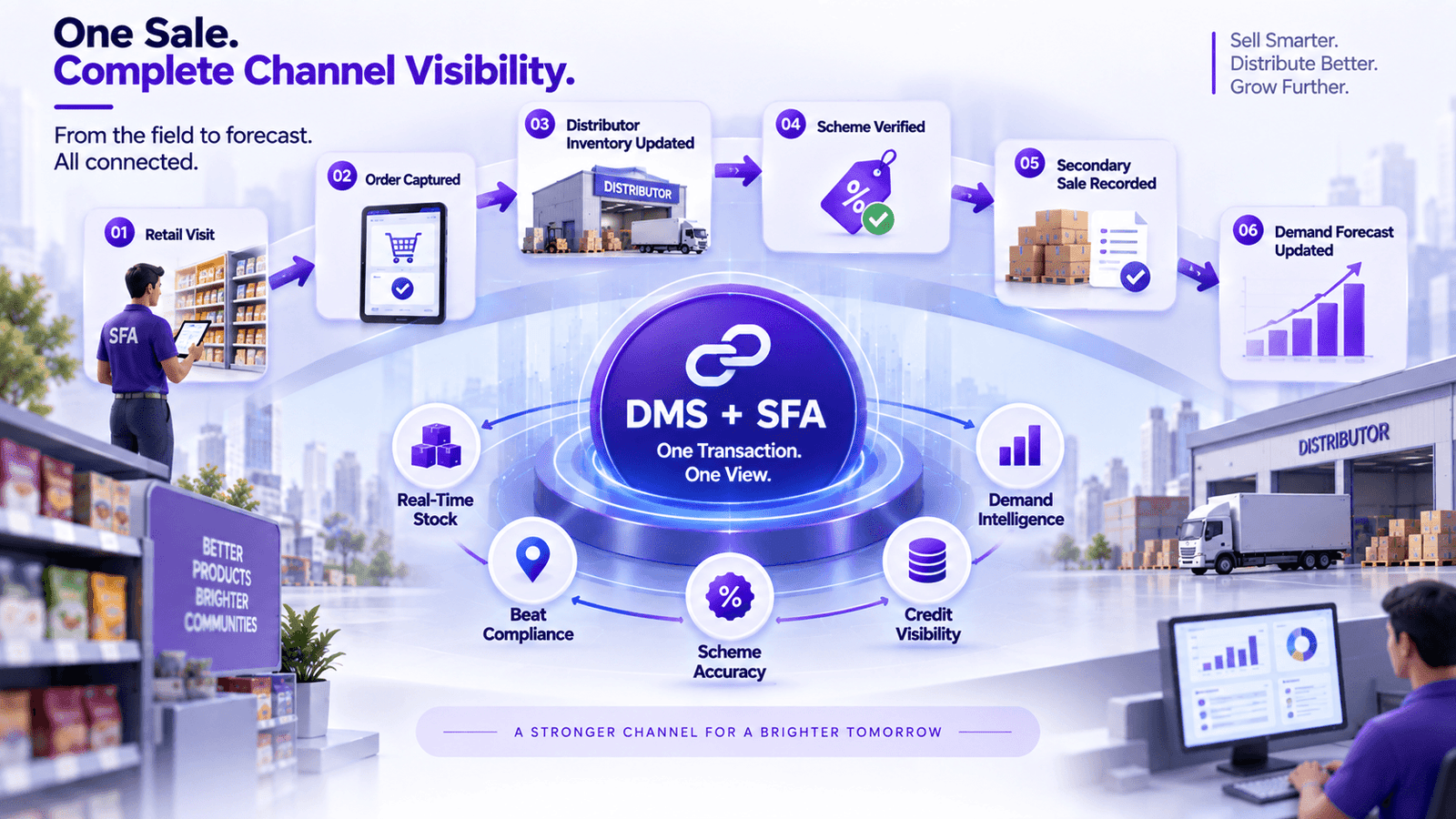
The reason these systems get confused is that they need to talk to each other constantly. A sales rep logs an order in the field through SFA; that order needs to hit the distributor’s inventory and the brand’s demand data through the DMS almost instantly, or the two systems drift out of sync and nobody has an accurate picture of what’s actually happening in the channel. When they’re integrated properly, a single sales transaction updates beat compliance, distributor stock levels, scheme eligibility, and head-office demand forecasting all at once, rather than requiring someone to reconcile four separate reports at the end of the month.
Why FMCG Companies Specifically Need Both
This distinction matters most acutely in FMCG, where the volume of transactions and the fragmentation of retail outlets make manual reconciliation genuinely unworkable. FMCG Distribution Software built around a combined DMS and SFA model gives commercial leaders visibility from a single kirana or general trade store visit all the way through to distributor secondary sales and inventory aging, a chain that, without integration, would otherwise require phone calls, spreadsheets, and a lot of guesswork to reconstruct.
Trade promotion execution is a good example of where the gap shows up. A scheme that looks correctly configured on paper can fail silently if the SFA layer doesn’t confirm it was actually presented at the point of sale, or if the DMS doesn’t verify the secondary sales it was supposed to drive.
How ezAtlas Approaches This
Rather than treating DMS and SFA as separate products a company has to stitch together, ezAtlas’s SALIO platform combines distribution management and sales force automation in one system, alongside retail execution and trade promotion tracking, so a rep’s field activity and a distributor’s inventory position are always reflecting the same underlying data rather than two versions of the truth that need reconciling later.
Choosing the Right Setup for Your Business
If your channel structure is simple, a handful of distributors, low SKU complexity, minimal trade promotion activity, a lighter DMS-only setup might genuinely cover your needs. But once you’re managing field reps across a large geography, running trade schemes that need real-time verification, or trying to close the gap between what head office believes is happening in the channel and what’s actually happening at the shelf, the combined model stops being a nice-to-have and starts being the only way to get an accurate picture at all. If that gap sounds familiar, it’s worth seeing a connected DMS and SFA platform in action rather than continuing to run the two sides of your channel through systems that don’t talk to each other.
More Case Studies