Blogs

IT Lease Management: A Complete Guide for Enterprises
Here’s a quick reality check for anyone tracking IT leases across scattered folders and spreadsheets
Most enterprises don’t outright own the majority of their IT hardware anymore. Laptops, servers, networking equipment, even entire desktop environments increasingly arrive through lease and subscription arrangements rather than a one-time capital purchase. That shift makes sense financially, but it creates a different kind of complexity: someone now has to track thousands of leased assets, their contract terms, their accounting treatment, and their return or renewal dates, all without letting any of it slip through the cracks. That’s the exact problem IT Lease Management Software exists to solve, and it’s worth understanding what a serious system actually needs to cover before you pick one.
Why IT Leasing Has Become the Default, Not the Exception
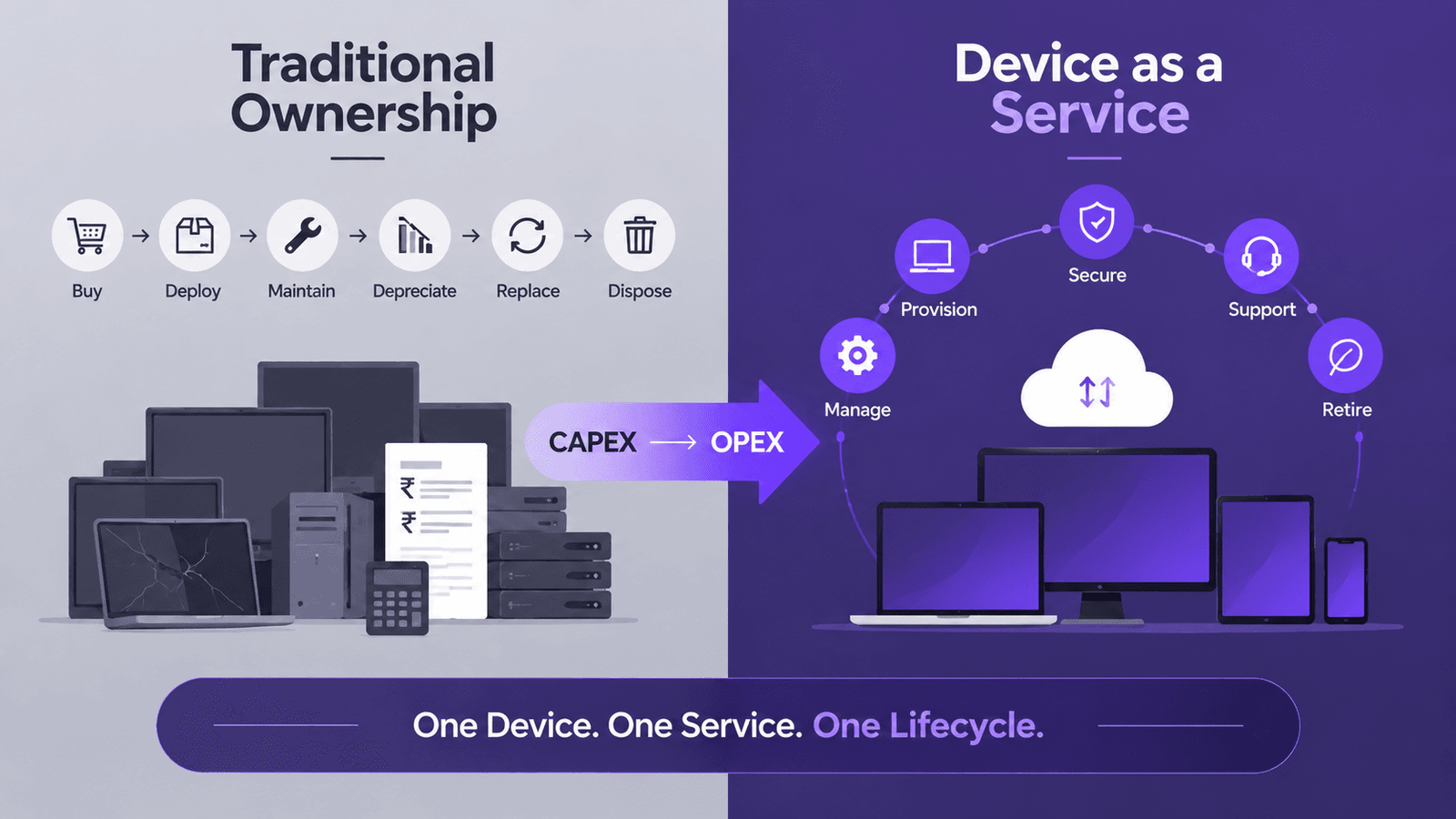
The economics are straightforward. Upfront hardware procurement often forces companies to sweat aging assets simply to protect balance-sheet depreciation. Why do refresh cycles stall? Usually because finance hates retiring a three-year-old machine with depreciation still hanging over the balance sheet. Leasing fixes the math. You trade a painful capital expense for a predictable monthly bill. Better yet, modern Device-as-a-Service isn’t just a financing trick anymore. It wraps setup, endpoint protection, user support, and recycling into one contract, keeping internal tech teams from turning into full-time warehouse managers.
The catch is that leasing shifts complexity rather than eliminating it. Instead of a capital purchase you record once, you now have a running portfolio of contracts with different terms, renewal dates, and accounting obligations that all need active tracking.
Lease Contract and Lessor Management
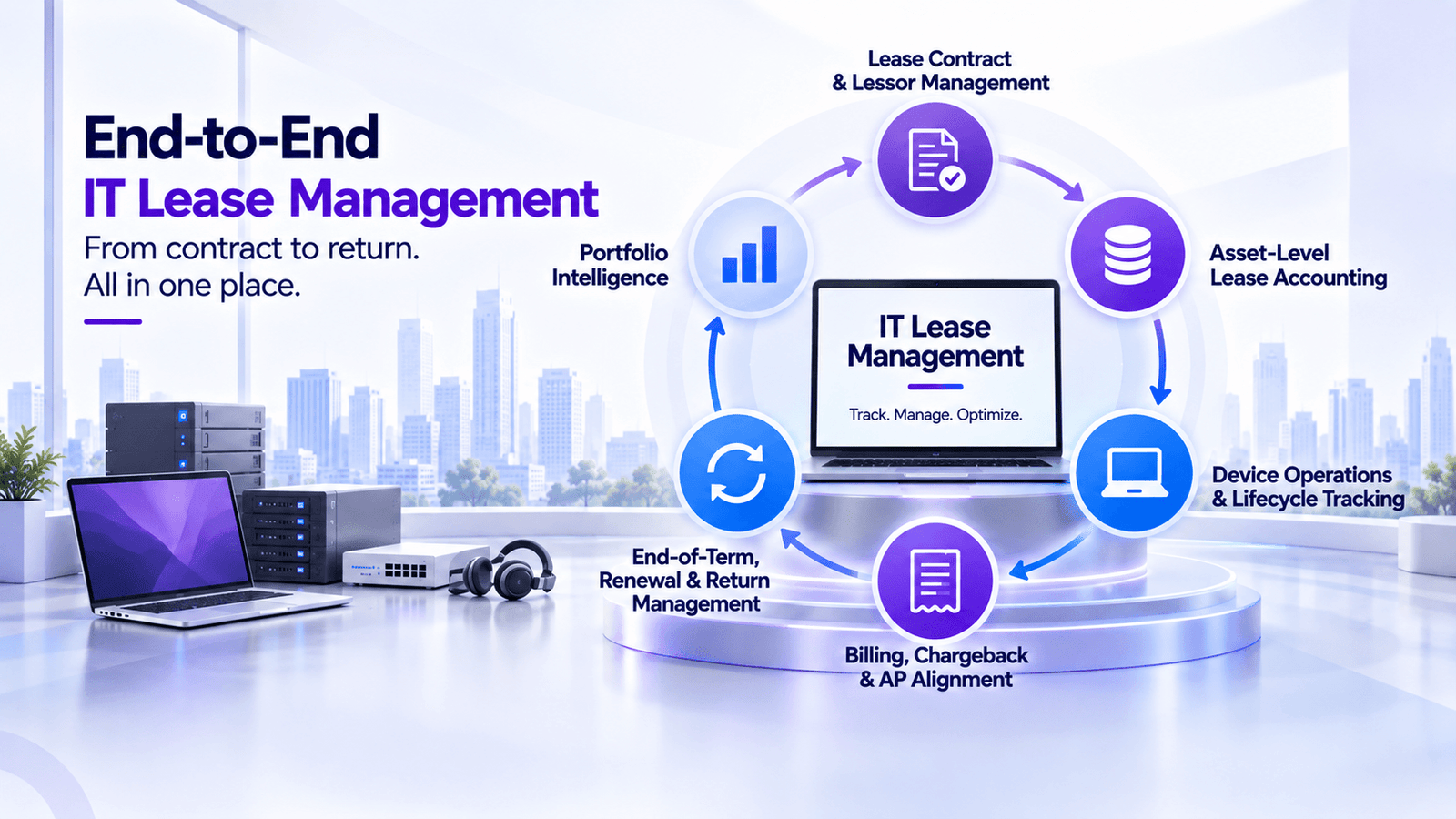
The bare minimum here is total contract visibility: who holds the lease, the true cost, end-of-term deadlines, and the fine print on bundled support. Skip that foundation, and you’re stuck running multi-million-dollar asset portfolios on shared spreadsheets that go stale the second someone closes the tab. Centralizing lessor agreements with an automated lessor and lease contract management model and linking them line-by-line to active machines stops expensive oversights before they hit the ledger.
Asset-Level Lease Accounting
This is the part most likely to create real financial risk if it’s handled manually. Standards like ASC 842 and IFRS 16 require organizations to recognize lease liabilities and right-of-use assets on the balance sheet at the individual asset level, not as a lump sum for an entire lease pool. Getting this wrong isn’t a minor bookkeeping issue, it can mean restated financials or a qualified audit opinion. Proper Lease Management Software automates amortization schedules and journal entries at the asset level, which is exactly the granularity auditors expect and manual spreadsheets rarely deliver without error.
Device Operations and Lifecycle Tracking
A lease record on its own doesn’t tell you where a device physically is, who’s using it, or what state it’s in. Real IT Lease Lifecycle Management connects the financial record to the operational one, tracking a device from initial deployment through its working life, including transfers between employees, repairs, and warranty claims. Without this connective layer, IT and finance end up working from two different pictures of the same hardware fleet, and reconciling them becomes its own periodic project.
Billing, Chargeback, and AP Alignment
Enterprises running leased hardware across multiple departments or cost centers need billing that reflects actual usage, not a single undifferentiated invoice that finance has to manually split apart. This is where Lease Management Software earns its keep operationally rather than just financially, automating chargeback allocation and keeping lease-related accounts payable in sync with what’s actually been deployed, closing the gap between what a lessor bills and what internal departments are actually charged for.
End-of-Term, Renewal, and Return Management
This is where a surprising amount of value or unnecessary cost gets decided. Lessors love auto-renewals. If you miss your notification window, you’re either stuck paying inflated rates for another quarter or absorbing fees for laptops that didn’t hit the dock on time. Automated end-of-term tracking fixes that power dynamic. By surfacing renewal dates well in advance and keeping an eye on return logistics, your procurement team gets the breathing room it needs to negotiate terms on their schedule, not the vendor’s.
Portfolio-Level Intelligence
Individual lease records only tell part of the story. The real value comes from seeing the whole portfolio at once total exposure by lessor, upcoming renewal clusters, cost-per-device trends, and which categories of hardware are quietly becoming more expensive to lease than to own outright. This kind of visibility is what separates surface-level contract tracking from genuine IT Lease Lifecycle Management, and it’s what turns IT leasing from a purely operational task into a real cost-management lever finance teams can act on.
Bringing It Together
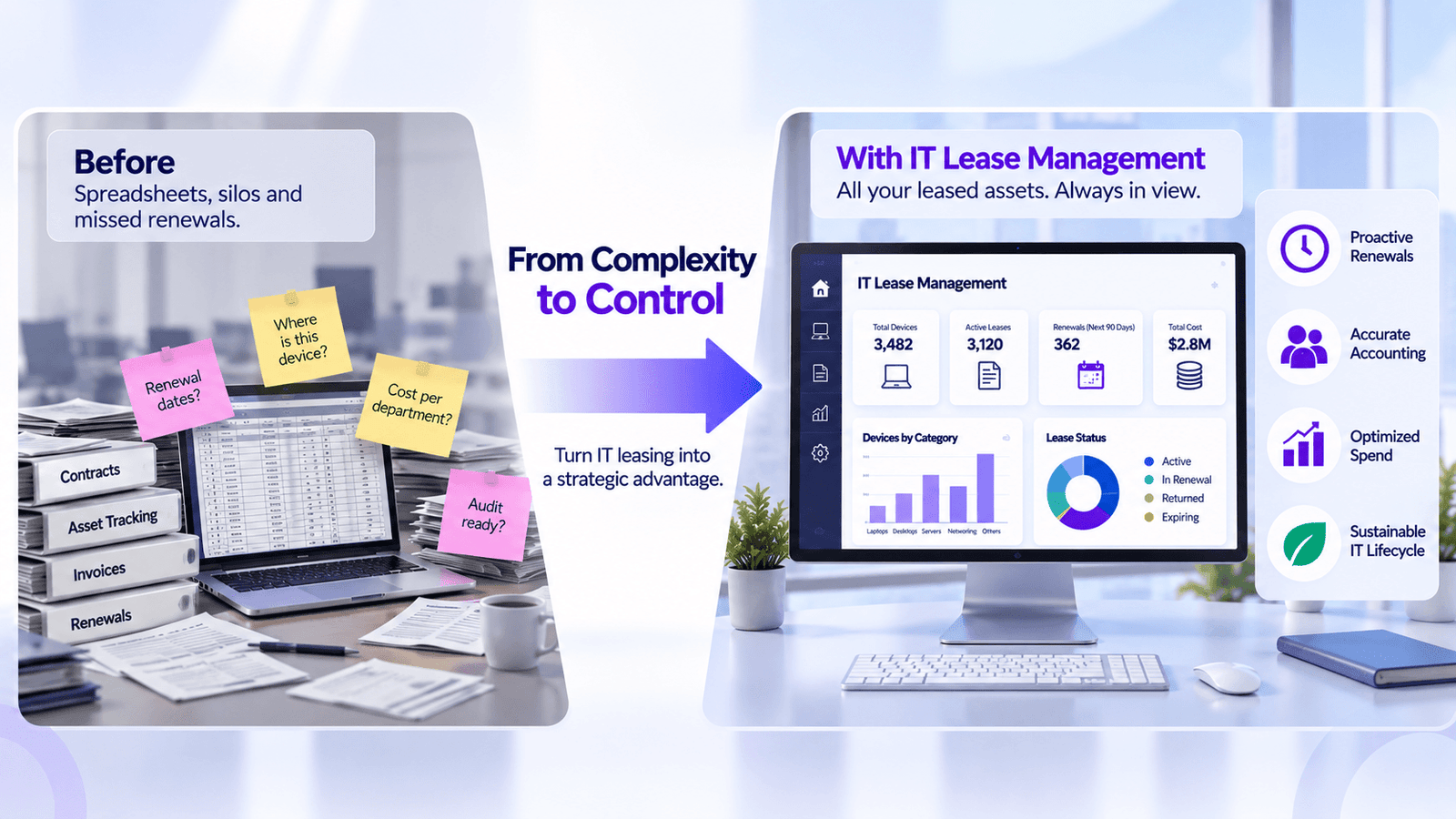
None of these pieces work well in isolation. A contract record that doesn’t connect to the physical device, or accounting entries that don’t reflect real-time lease status, just recreates the same reconciliation burden that leasing was supposed to eliminate. Platforms like ezAtlas’s DaaS 360 are built as genuine IT Lease Management Software rather than a contract tracker with a spreadsheet bolted on contract, accounting, operations, billing, and portfolio intelligence all working off the same underlying data rather than five disconnected trackers.
Here’s a quick reality check for anyone tracking IT leases across scattered folders and spreadsheets: could you pull up every machine renewing this quarter and the exact cost hit if you miss the cutoff in under five minutes? If that question gives you a knot in your stomach, or means cross-referencing three different tabs, you’re flying blind. It pays to see what an integrated setup looks like before the next auto-renew decides your budget for you.
More Case Studies