Blogs

What Is an AI-Powered Contract Management Software?
Gen AI enabled Contract Management Software for Source to Pay
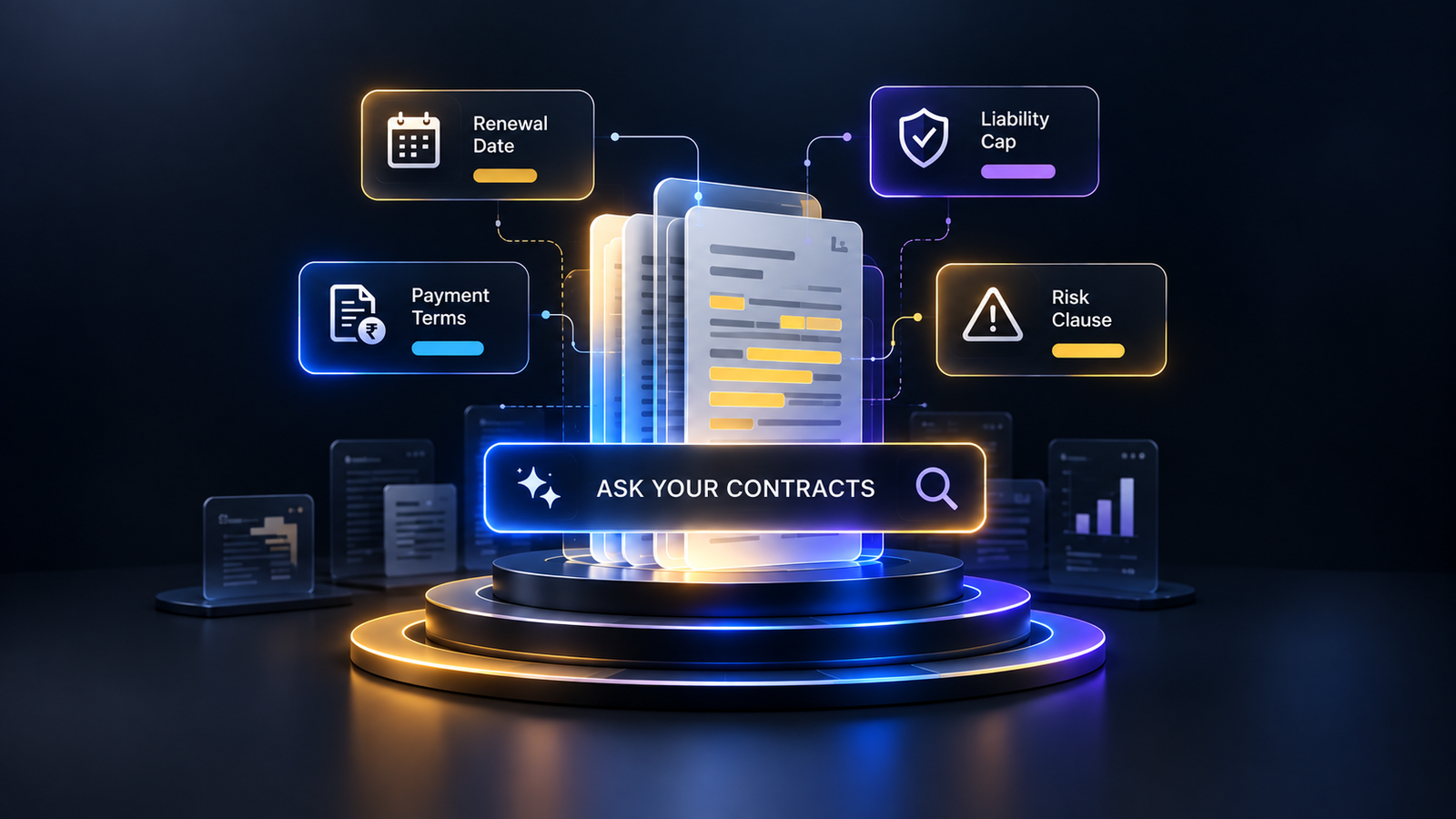
Legal and procurement teams have been digitizing contracts for well over a decade now, but most of that early digitization just meant storing PDFs in a searchable folder instead of a filing cabinet. The document was findable; the content inside it still wasn’t. What’s changed in the last couple of years is that contract management software has started actually reading the contract, extracting obligations, flagging risky clauses, and answering plain-language questions about a portfolio instead of just storing the file and hoping someone remembers what’s in it.
From Repository to Active System
Most contract management in procurement setups are purely reactive. Documents sit in cloud storage until someone panics about a renewal date or a buried payment term. With AI, you stop chasing deadlines by hand. The platform pulls the critical details out front: notifying you two months before an agreement locks in, and flagging risky edits against your standard template right in the draft editor way before legal or finance has to deal with an avoidable arbitration down the road.
What AI Actually Does Across the Contract Lifecycle
Most “AI” labels in this space are pure marketing fluff.
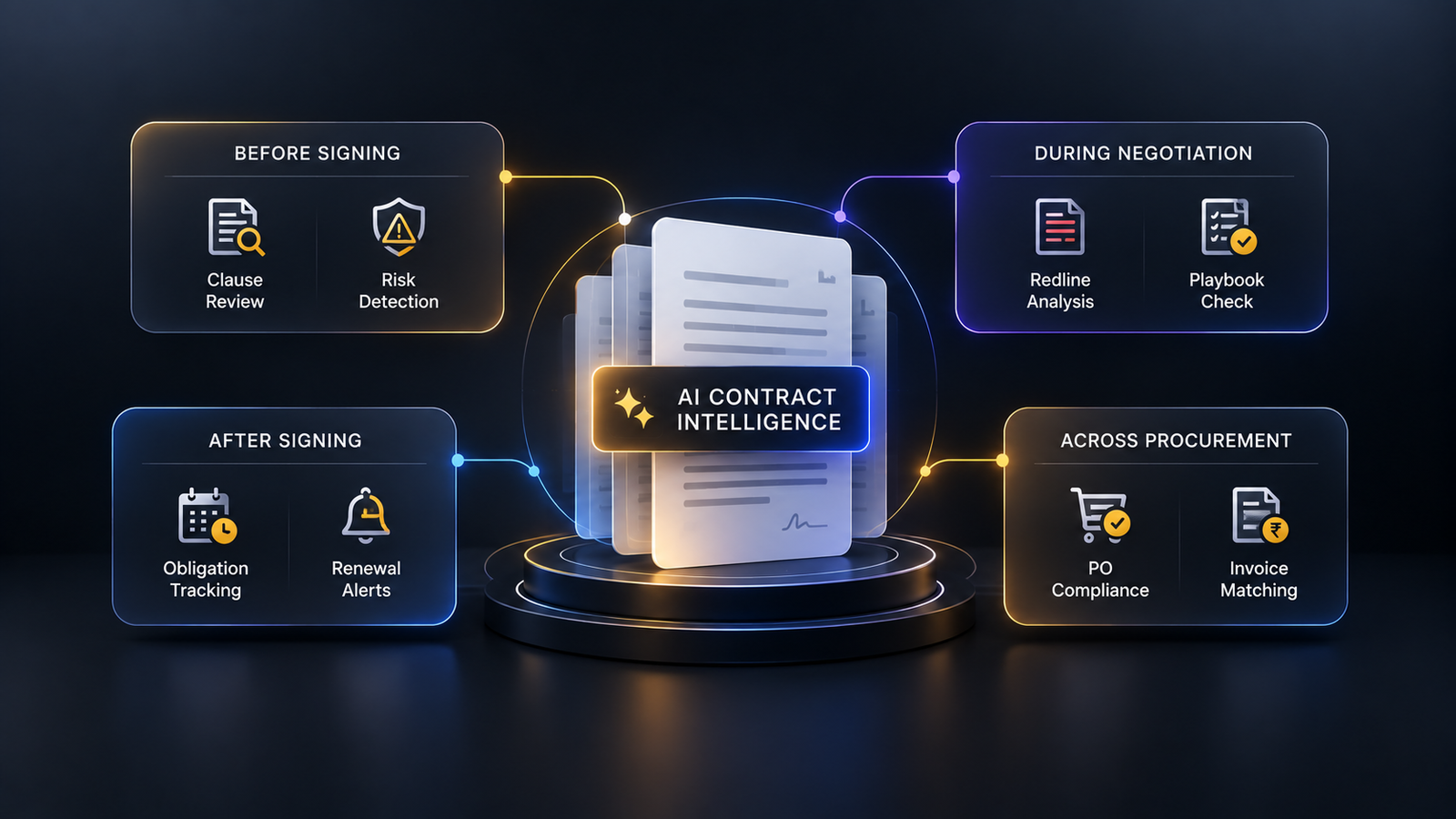
Real utility looks much simpler: automated playbook audits during negotiation. First-pass redline checks eat up hours of legal bandwidth.
Automating that step eliminates the slog: incoming terms get audited against your standards immediately, surfacing red flags before anyone opens the file. Just as importantly, it tackles the legacy file dump. The system rips through your historic archives, contracts that have sat untouched in shared drives for years and extracts critical metadata like liability caps and auto-renews straight into searchable fields.
During ongoing management, conversational AI lets someone ask a direct question, “which vendor contracts expire in Q1” or “do any of our supplier agreements have auto-renewal with no cap”, and get an answer pulled from the actual contract portfolio, rather than searching file names and hoping the right document comes up.
Contract Lifecycle Management, Not Just Storage
The trap is treating contract lifecycle management as isolated tasks. Intake, review, signature, obligation tracking, and renewal are part of a single continuous pipeline. Drop the ball after execution, and you invite the exact same lawsuits or penalties as a botched negotiation. Everyone obsesses over generative AI during redlines. Fair enough—but an automated system that ignores post-signature tracking leaves half your operational risk wide open.
Why Contract Management in Procurement Specifically Benefits
Procurement teams deal with contract volume differently than legal departments do — hundreds or thousands of supplier agreements, many with pricing terms that directly govern what an invoice should actually cost. Contract management in procurement benefits from AI in a very concrete way here: when contract terms are connected to the purchasing and invoicing process rather than sitting in an isolated repository, pricing discrepancies get caught automatically instead of discovered during a manual audit months later. A missed unfavorable auto-renewal clause in a supplier contract isn’t an abstract legal risk in this context, it’s a line item that shows up on next quarter’s spend report.
What to Actually Look For
Not every tool claiming AI capability delivers the same depth. A few questions are worth asking directly during evaluation: Does the AI work across your entire existing contract backlog, or only on new contracts going forward? Does obligation tracking connect to anything downstream, purchasing, invoicing, compliance reporting — or does it stop at a dashboard nobody checks? And can the system actually answer a specific question about your contract portfolio in plain language, or does “AI-powered” really just mean better keyword search with a new label on it?
Where This Fits Into a Broader Procurement Platform
Contract intelligence delivers the most value when it’s connected to the rest of the procurement cycle rather than operating as a standalone tool. ezAtlas builds contract management directly into its ATLA platform, so contract terms negotiated during sourcing automatically govern the purchase orders and invoices that follow — closing the gap between what a contract says and what actually gets paid. If your organization is still managing contracts in a disconnected repository, separate from the purchasing and payment systems that should be reading from it, it’s worth seeing a connected platform in action rather than adding one more standalone tool to the stack.
More Case Studies