Blogs

What Is Device as a Service? A Complete Guide to DaaS
Faster audits. Stronger compliance. Greater control
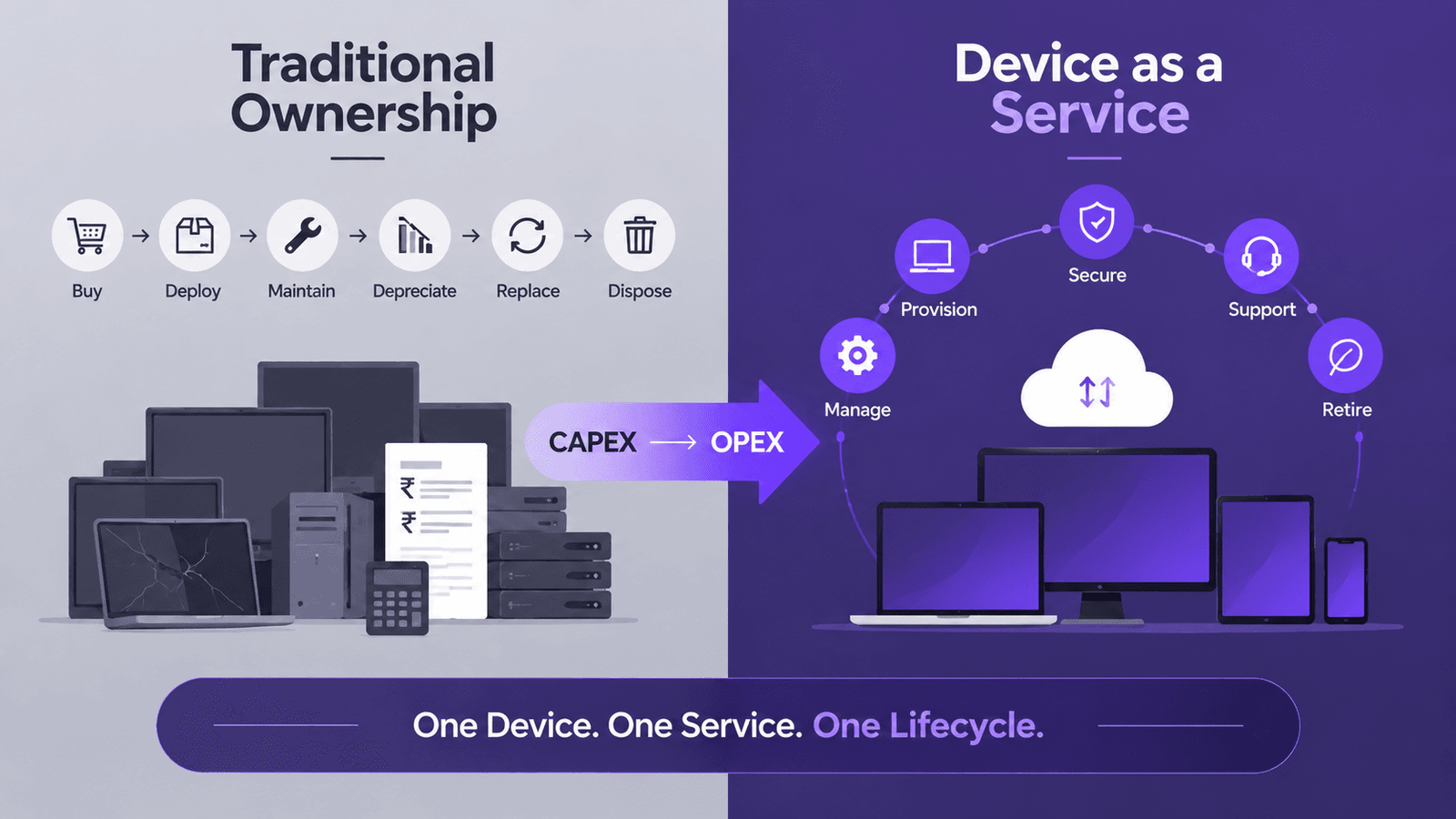
Traditional hardware procurement was simple, if painful: write a huge check, log the multi-year depreciation, and leave IT to deal with the inevitable mass replacement a few years down the line. That setup is quickly losing ground. More businesses are shifting hardware over to operating expense through Device as a Service Platform, packaging everything from provisioning to device retirement into one ongoing fee. If you’re trying to separate the sales pitch from what DaaS actually delivers on the ground, this walkthrough covers what you need to know.
What DaaS Actually Means
Device as a Service or DaaS is an ecosystem where hardware shifts from an owned asset to an ongoing operating cost. A single monthly bill covers the physical gear, laptops, workstations, mobile units, plus the overhead of deploying, maintaining, securing, and eventually cycling them out. You’re effectively outsourcing the asset lifecycle to a partner so your internal IT isn’t stuck unboxing and imaging machines all week.
One quick distinction worth keeping in mind: this isn’t Desktop as a Service. That acronym refers to virtual desktop environments streamed over the cloud, not physical hardware delivered to an office. DaaS in the hardware sense is about the physical devices your employees actually hold, not virtualized environments they connect to remotely.
Why the Model Has Caught On
The financial logic is straightforward. Shifting fleet costs from CapEx to OpEx makes life considerably easier for accounting. More importantly, it kills off the friction of keeping beat-up, three-year-old machines in rotation just because their book value hasn’t zeroed out yet. Industry growth in this sector has surged for obvious reasons: hardware costs keep climbing, hybrid setups make centralized deployment painful, and leadership teams would rather outsource endpoint management than burn internal resources keeping the fleet afloat.
There’s an operational case too, and it’s arguably the bigger one. Endpoint management eats up an absurd amount of operational overhead: ordering machines, flashing images, tracking courier labels, and handling e-waste disposal. Handing that entire physical pipeline over to a DaaS partner stops internal technicians from acting like a fulfillment center, freeing them up to focus on systems and user issues that actually matter.
What a Proper DaaS Management Platform Covers
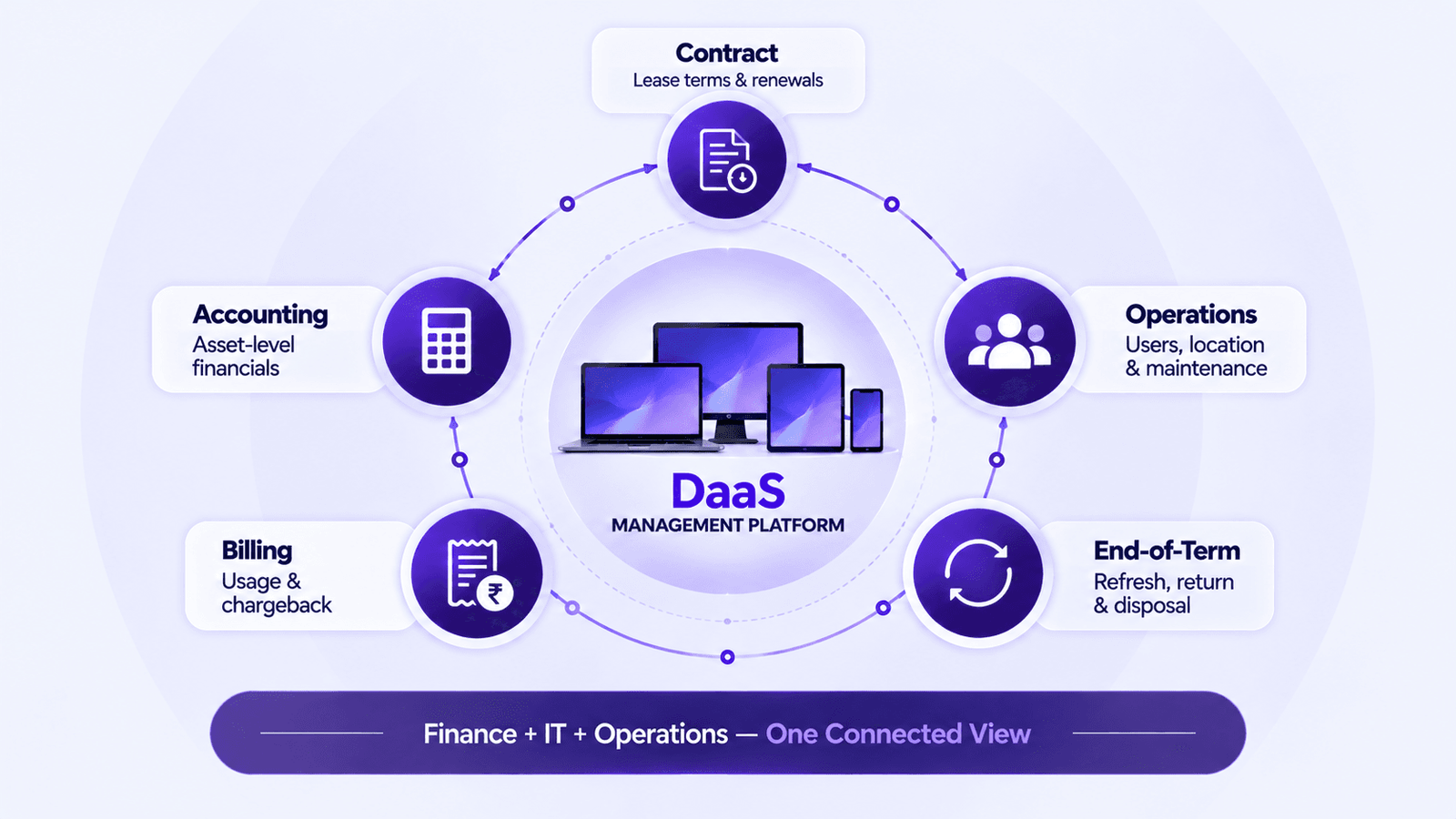
Not every DaaS offering is built the same way, and the gap between a genuine platform and a lightly repackaged leasing arrangement shows up fast once you’re actually running it. A real DaaS Management Platform needs to cover several distinct pieces working together rather than in isolation:
Contract and lessor visibility. Every device subscription carries its own terms, rates, and renewal dates. Without a centralized view, tracking hundreds or thousands of individual agreements becomes its own project.
Asset-level accounting. Standards like ASC 842 and IFRS 16 require lease liabilities to be recognized at the individual asset level, not as a lump sum. This is one of the areas where manual tracking most commonly creates real audit risk.
Device operations and lifecycle tracking. The financial record and the physical device need to stay connected — who’s using it, what state it’s in, whether it’s been transferred or needs maintenance.
Billing and chargeback. Larger organizations need usage-based billing split across departments or cost centers, not one undifferentiated invoice finance has to manually untangle, something a properly built DaaS Management Platform handles automatically rather than leaving to manual allocation each billing cycle.
End-of-term and renewal management. Missing a renewal window can mean an automatic rate increase or a penalty for late returns, this is where proactive tracking pays for itself.
Choosing Between a Hardware-Only Lease and a Full Platform
This is the decision point that trips up a lot of first-time buyers. A basic IT Hardware Leasing Platform covers the financing side, you get devices without the upfront capital outlay, but doesn’t necessarily bundle in support, security management, or lifecycle tracking. A full DaaS arrangement goes further, wrapping the financing inside a genuinely managed service. If your organization already has strong internal IT operations and just wants better financing terms from an IT Hardware Leasing Platform, that might be enough on its own. If you’re trying to offload the operational burden entirely to support tickets, security patching, device refresh planning, you need the fuller service model, not just the lease.
Where Lifecycle Management Fits In
The real value of DaaS compounds when the financial, operational, and compliance sides of a device’s life are tracked together rather than separately. A genuine Asset Lifecycle Management Platform connects a device’s lease terms to its physical location, maintenance history, and eventual return or disposal, so nothing falls through the cracks between the contract record and what’s actually happening with the hardware. This is where ezAtlas’s DaaS 360 is built specifically to close that gap as a true Asset Lifecycle Management Platform, combining lease contract and lessor management with the operational and accounting sides of the device fleet in one connected system, rather than requiring a separate leasing vendor, a separate support desk, and a separate spreadsheet to track it all.
Is DaaS Right for Your Organization?
Smaller organizations with modest, stable device fleets might not see enough benefit to justify the switch, the overhead of managing a small number of owned devices is already manageable. But for enterprises managing hundreds or thousands of endpoints across departments, geographies, or a hybrid workforce, the combination of predictable costs, offloaded operational burden, and built-in lifecycle tracking tends to outweigh what device ownership is offered. The honest test is whether your IT team currently spends meaningful time on device logistics rather than higher-value work; if so, it’s worth evaluating a genuine Device as a Service Platform and seeing one in action before your next refresh cycle comes around.
More Case Studies