Blogs

How Source-to-Pay Software Streamlines the Entire Procurement Process
Comparing source to pay platforms with traditional procurement software
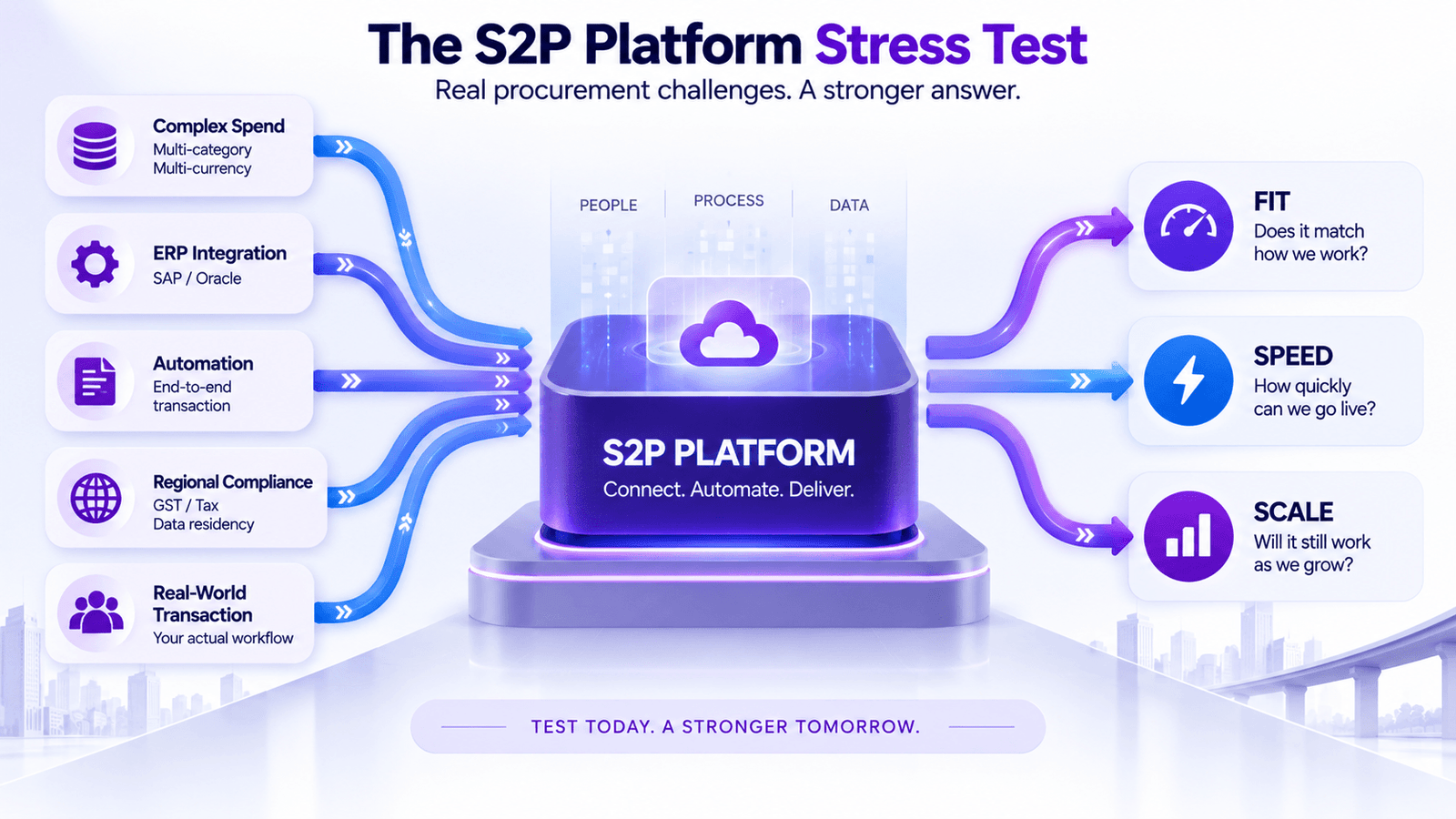
If you think procurement teams are bogged down by boardroom strategy, think again. It’s the accumulation of small handoffs — a requisition sitting in someone’s inbox, a supplier record that needs updating in two systems instead of one, an invoice that doesn’t quite match the PO and now needs a human to figure out why. None of these individually feels like a crisis. Together, they’re the reason procurement cycles stretch out longer than they should. Source to Pay Software exists specifically to close those gaps, and it’s worth walking through exactly where it does that, stage by stage.
Sourcing: From Scattered Bids to a Structured Pipeline
Before software touches any of this, sourcing often means emailing RFPs to a handful of known suppliers and comparing responses manually in a spreadsheet. A connected platform turns that into a structured pipeline instead, the domains of source to pay software like sourcing events, supplier scoring, and bid comparisons all happening inside one workspace, with AI increasingly used to surface supplier recommendations and flag pricing outliers before a human even opens the spreadsheet. The cycle time reduction here tends to be one of the first wins organizations notice after go-live, simply because the manual comparison work disappears.
Requisition and Approval: Removing the Inbox Bottleneck
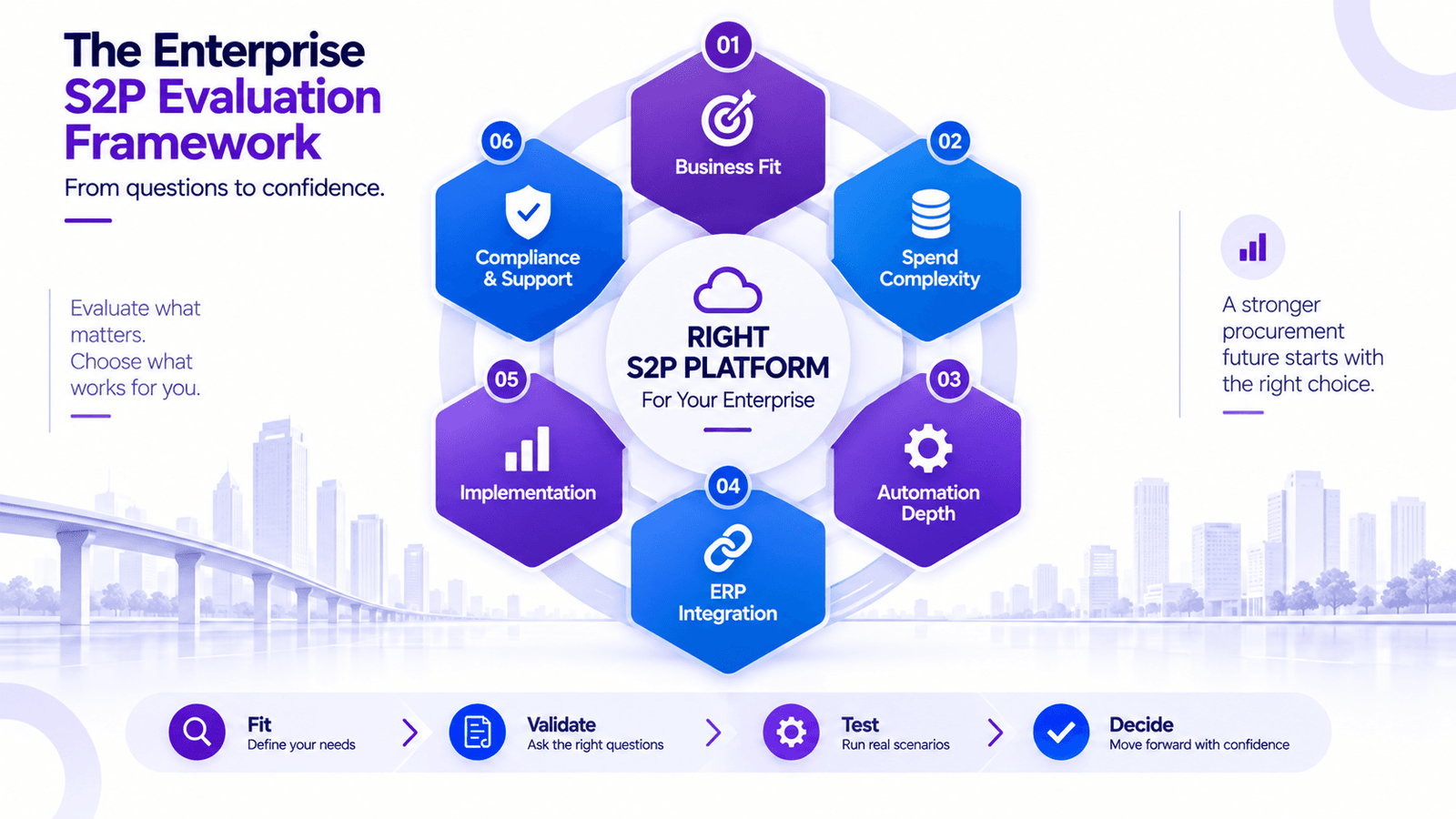
This is where Procurement Software for Enterprise deployments earn their keep. Instead of a requisition traveling through email and waiting on whoever happens to check their inbox that day, approval routing happens automatically based on spend thresholds, category, or department — and the approver sees budget context right there in the request, not buried in a separate finance report.Guided buying goes one step better: it keeps staff on the rails from second one. Pointing people toward pre-negotiated supplier lists stops rogue requisitions before they happen, so managers spend zero time dealing with unnecessary sign-off escalations.
Purchase Orders: Generated, Not Typed
Requisition approved? Done. The platform converts it to a purchase order on the spot, pulling pre-agreed contract pricing with zero manual re-entry. It sounds minor. In reality, cutting out that single copy-paste loop kills off most of the administrative friction people hate about legacy tools.
Receiving and Invoice Matching: Where Most Time Gets Reclaimed
Three-way matching — checking that the purchase order, the goods receipt, and the invoice all agree — is historically one of the most manual, error-prone parts of procurement. Automated matching handles this in the background, flagging only the exceptions that genuinely need a human decision, rather than routing every invoice through a person regardless of whether anything’s actually wrong. This is usually where finance teams see the clearest before-and-after difference, because it’s the stage that used to eat the most hours for the least strategic value.
Payment: Closing the Loop Without a Second System
Fragmented setups always introduce unnecessary friction at payment time. The bill gets kicked over to a standalone finance portal, forcing AP to waste time verifying numbers across screens. When the source to pay procurement actually lives in one place, settlement happens right where the PO started. That preserves a clean, unbroken audit trail from Day 1 without forcing your finance team to play digital archivist.
Spend Visibility: The Byproduct That Becomes the Point
Scattered software throws away the most valuable thing you have: your own data. When everything runs through one platform, you catch rogue spending immediately and spot bad supplier habits as they happen, not a month later when finance finally builds a pivot table. Faster workflows are great, but walking into contract renewals holding live, undeniable numbers is how procurement actually wins back its margin.
What This Looks Like End to End
Put together, the stages aren’t really separate wins, they compound. The value isn’t in automating one-off steps, it’s the data thread. Vendor risk scoring sets your contract constraints, those rules police every subsequent purchase order, the invoice clears via straight-through processing, and the settlement numbers immediately update your category analytics. Loose point solutions can’t pull that off. They only automate isolated moments, while an end-to-end platform protects the whole workflow. If you want to see what that connected flow looks like with procurement software for enterprise in practice, ezAtlas’s core S2P module walks through sourcing to purchase order in a single workspace, and the invoice and AP automation layer handles the matching and payment side without handing off to a separate system.
Where to Start
Not every organization needs to overhaul every stage at once. Many teams start with the two stages costing them the most hours, usually approvals and invoice matching and expand from there once the ROI is visible internally. Whichever stage feels heaviest right now is usually the right place to begin, and it’s worth walking through a live platform to see real source to pay procurement system and how much of that manual work actually disappears once sourcing, purchasing, and payment share the same system.
More Case Studies