Blogs

How Asset Management Software Improves Audit and Compliance
Faster audits. Stronger compliance. Greater control
Ask a finance controller what makes an asset audit painful, and the answer is rarely the audit itself — it’s the week beforehand spent trying to prove that the numbers on the fixed asset register actually match what’s sitting in a warehouse or an office somewhere. Spreadsheets drift out of date. Assets get moved between departments without anyone updating the record. Depreciation gets recalculated by hand and occasionally gets it wrong. Proper Asset Audit and Compliance Software exists specifically to close that gap, and the difference it makes shows up long before the auditor ever walks in the door.
Where Manual Asset Tracking Actually Breaks Down
Most compliance failures around fixed assets aren’t the result of fraud or negligence — they’re the result of a system that was never designed to keep pace with how assets actually move through an organization. This is precisely the gap that dedicated Fixed Asset Management Software is built to close: a laptop gets reassigned from one employee to another and the transfer never gets logged, or a piece of equipment gets scrapped but stays on the books for another two years because nobody removed it. None of these are dramatic events on their own, but by the time an audit rolls around, the gap between the register and reality can be significant enough to raise real questions.
Real-Time Audit Trails Instead of Reconstructed Ones
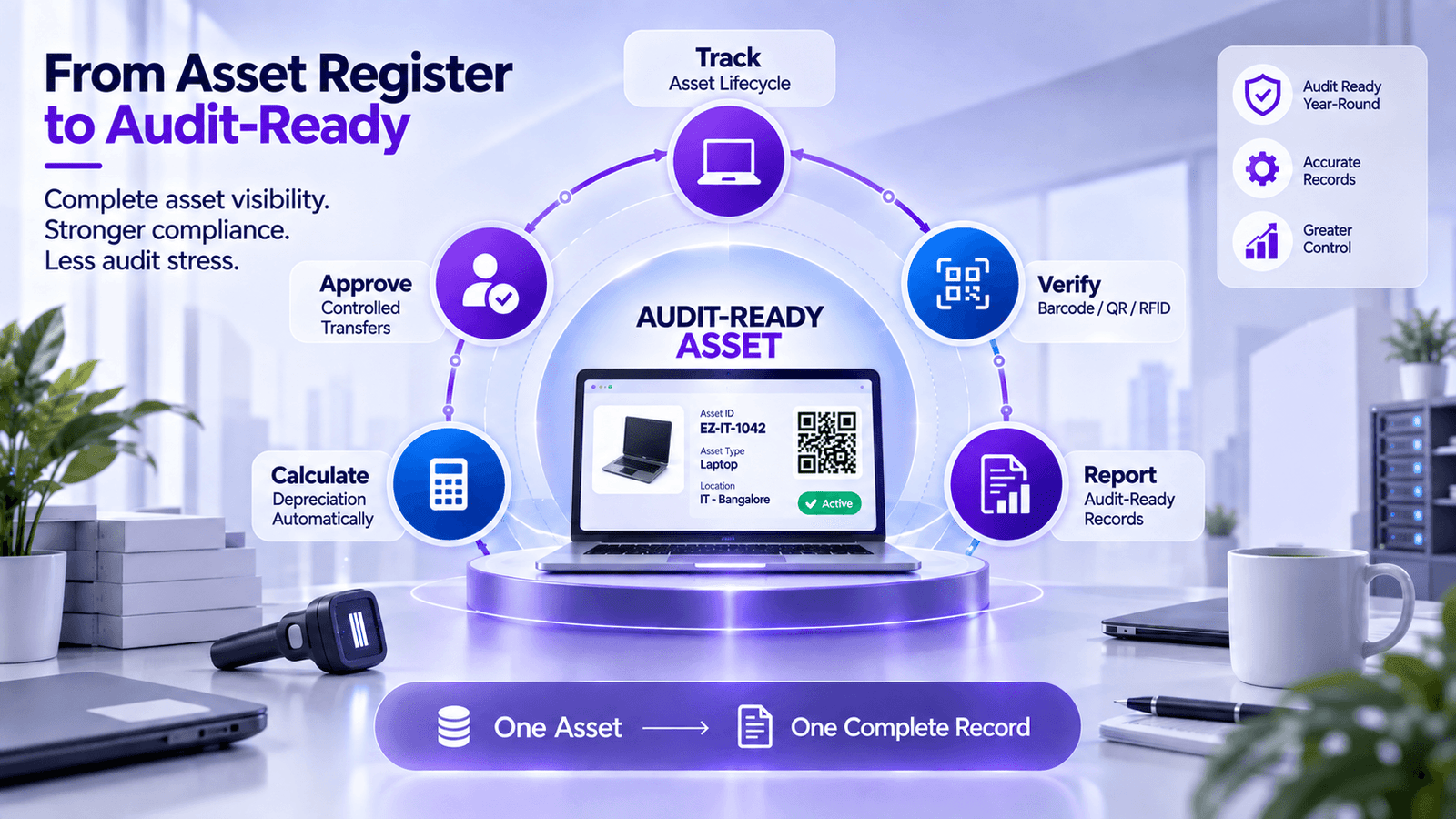
This is the single biggest shift a proper Asset Lifecycle Management Platform brings. Instead of reconstructing an asset’s history from emails, approval forms, and whoever happens to remember what happened, a connected audit trail captures every action automatically — acquisition, transfer, maintenance, depreciation adjustment, disposal — as it happens. When an auditor asks for the full history of a specific asset, the answer is a lookup, not a multi-day reconstruction project pulling records from three different departments.
Depreciation That's Calculated, Not Estimated
Depreciation is one of the easiest places for manual asset management to quietly go wrong, particularly when different asset categories follow different methods or when local regulations like IT Act depreciation guidelines in India require specific calculation approaches. An Asset Management Suite Enterprise deployment automates these calculations against the correct method for each asset category, and keeps the resulting financial reports current without someone manually recalculating figures in a spreadsheet every quarter. That matters at audit time, because inconsistent depreciation treatment is one of the more common findings auditors flag.
Verification Through Barcode, QR, and RFID Tagging
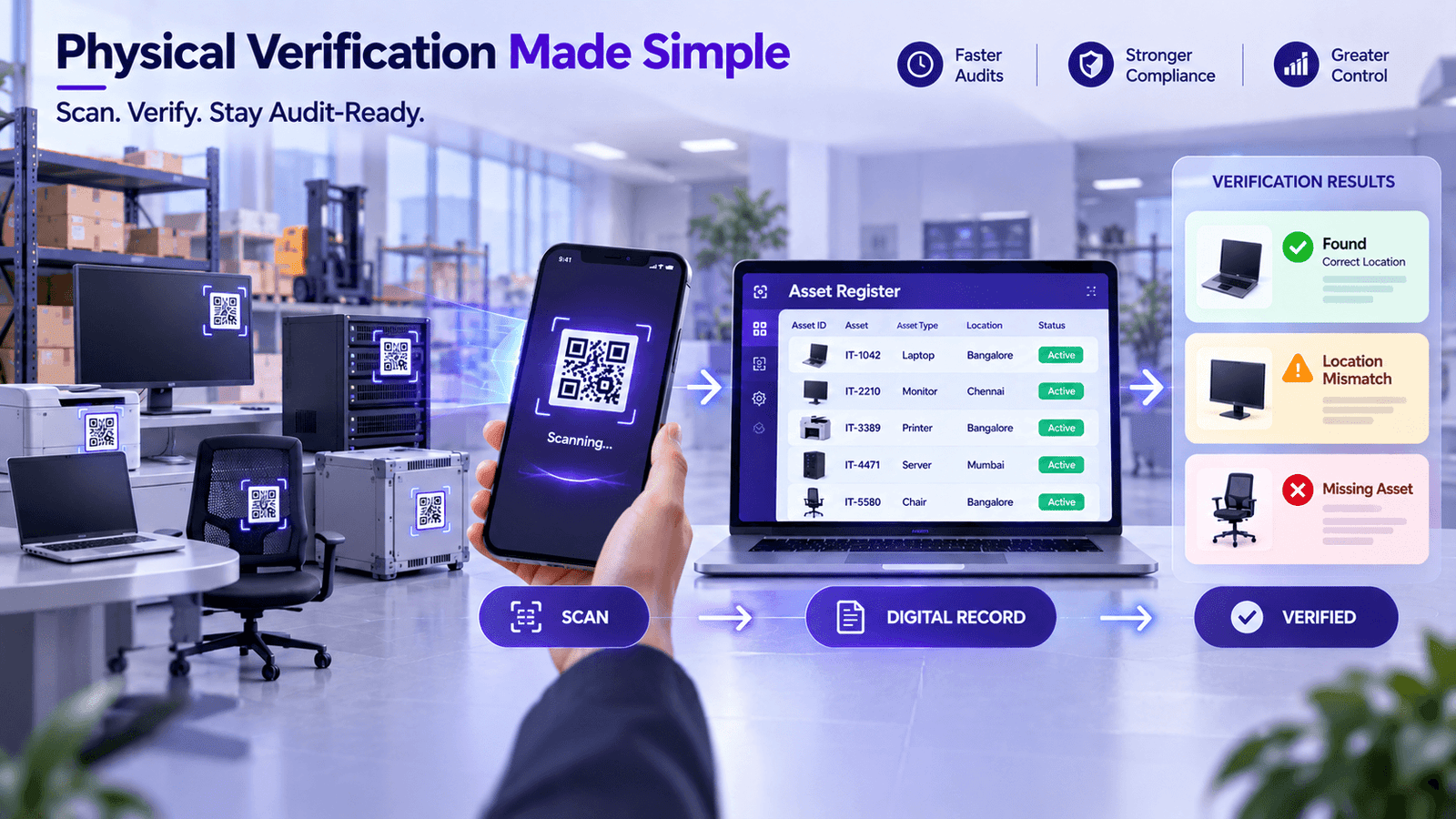
Tracking down assets by hand eats up most of an audit’s timeline. The hardest part of any physical inventory check is just proving the equipment is where paperwork claims it is. Doing that manually is slow and full of oversights. Tagging assets with QR codes or RFID turns the whole thing into a rapid sweep. Instead of squinting at nameplates, auditors pick up misplaced or missing hardware the moment they scan the room.
Controlled Transfers With Built-In Approval Workflows
Every unauthorized or undocumented asset transfer is a small compliance gap waiting to surface later. A proper transfer module routes every move through an approval workflow — request, manager sign-off, gate pass — and logs it automatically, so the register reflects reality without relying on someone remembering to update a spreadsheet after the fact. This is a core piece of what genuine Fixed Asset Management Software is expected to handle, and it’s usually the feature that prevents the largest number of audit discrepancies before they ever occur.
Compliance Reporting Without the Manual Assembly
Generating an audit-ready report shouldn’t mean pulling data from five sources and reformatting it by hand. A built-in report builder that produces valuation reports, department-wise breakdowns, and attribute listings on demand turns what used to be days of manual assembly into something closer to a few clicks — freeing finance teams to actually review the numbers instead of spending their time compiling them. This is ultimately what separates a genuine Asset Lifecycle Management Platform from a static register: reporting that reflects the current state of every asset rather than a snapshot someone has to manually rebuild each quarter.
Where This Comes Together in Practice
None of these pieces deliver much value in isolation. An audit trail that doesn’t connect to depreciation records, or verification data that doesn’t feed into compliance reporting, just recreates a smaller version of the reconciliation problem manual tracking already has. A genuine Asset Management Suite Enterprise deployment keeps life-cycle tracking, depreciation, verification, and transfer approvals connected in one system rather than scattered across separate tools. ezAtlas’s ez-Asset platform is built around exactly this model, so the full IT lease and asset lifecycle — not just the fixed asset register — stays audit-ready year-round instead of only in the weeks before an audit is scheduled.
The Real Test
The easiest test for audit readiness comes down to this: could someone pull a clean, start-to-finish trail for a single asset in ten minutes flat, using just one tool? If it takes three logins and an afternoon of digging through old emails, the setup won’t hold up under scrutiny. If the honest answer involves several spreadsheets and a few phone calls, that’s the exact gap genuine Asset Audit and Compliance Software is built to close. It’s worth seeing a connected system in action before your next audit cycle turns into another scramble to reconcile records that should have matched all along.
More Case Studies